TINY SEEDS VIRTUAL STORYTIME
Chapter by chapter, we can spot Jesus’ presence both in the Old and New Testaments.
For 2024 we will be…..
For 2024 we will be…..
“UNWRAPPING THE MANY NAMES OF JESUS”
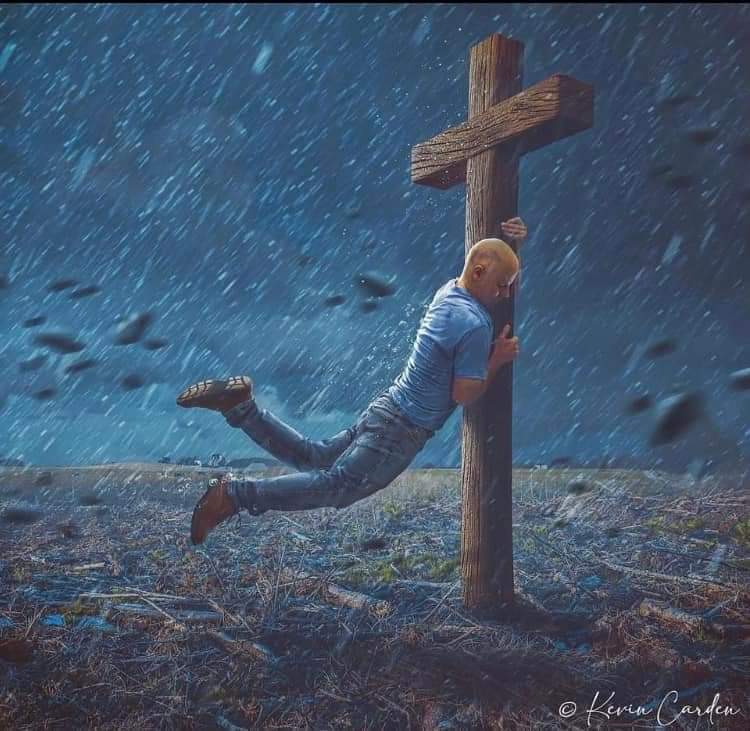
CLING TO JESUS FROM GENESIS TO REVELATIONS
THE MANY NAMES OF JESUS SO FAR:
SEED OF EVE AND REDEEMER (GENESIS)
PASSOVER LAMB AND NEW BEGINNING (EXODUS)
OUR HIGH PRIEST (LEVITICUS)
THE ONE LIFTED UP IN THE WILDERNESS (NUMBERS)
THE PROPHET LIKE MOSES (DEUTERONOMY)
CAPTAIN OF OUR SALVATION (JOSHUA)
JUDGE AND LAWGIVER (JUDGES)
KINSMAN REDEEMER (RUTH)
REJECTED KING (1 SAMUEL)
HEIR OF DAVID'S THRONE (2 SAMUEL)
OUR REIGNING KING (1-2 CHRONICLES)
REBUILDER OF THE BROKEN DOWN WALLS OF OUR LIFE (EZRA AND NEHEMIAH)
OUR PROVIDENTIAL PROTECTOR (ESTHER)
OUR MEDIATOR (JOB)
OUR SHEPHERD (PSALMS)
OUR WISDOM (PROVERBS AND ECCLESIASTES)
OUR BELOVED BRIDEGROOM (SONG OF SOLOMON)
PRINCE OF PEACE (ISAIAH)
OUR WEEPING PROPHET AND ULTIMATE GRIEF BEARER (JEREMIAH AND LAMENTATIONS)
THE FOUR-FACED MAN (EZEKIEL)
FOURTH MAN IN THE FIERY FURNACE (DANIEL)
THE FORGIVING HUSBAND (HOSEA)
UNEXPECTED AND UNQUALIFIED PROPHET (AMOS)
FOREIGN MISSIONARY (JONAH)
MESSENGER OF BEAUTIFUL FEET (MICAH)
DELIVERER (OBADIAH)
AVENGER OF GOD'S LAND (NAHUM)
OUR FOREVER HOPE AND JUSTIFIER (HABAKKUK)
NEW CREATION TO COME (ZEPHANIAH)
REDEEMER AND SPIRIT (JOEL)
"Therefore God exalted Him to the highest place and gave him the name that is above every name, that at the name of Jesus every knee should bow, in heaven and on earth and under the earth, and every tongue ackowledge that Jesus Christ is Lord, to the glory of God the Father."
(Philippians 2:9-11)
SEED OF EVE AND REDEEMER (GENESIS)
PASSOVER LAMB AND NEW BEGINNING (EXODUS)
OUR HIGH PRIEST (LEVITICUS)
THE ONE LIFTED UP IN THE WILDERNESS (NUMBERS)
THE PROPHET LIKE MOSES (DEUTERONOMY)
CAPTAIN OF OUR SALVATION (JOSHUA)
JUDGE AND LAWGIVER (JUDGES)
KINSMAN REDEEMER (RUTH)
REJECTED KING (1 SAMUEL)
HEIR OF DAVID'S THRONE (2 SAMUEL)
OUR REIGNING KING (1-2 CHRONICLES)
REBUILDER OF THE BROKEN DOWN WALLS OF OUR LIFE (EZRA AND NEHEMIAH)
OUR PROVIDENTIAL PROTECTOR (ESTHER)
OUR MEDIATOR (JOB)
OUR SHEPHERD (PSALMS)
OUR WISDOM (PROVERBS AND ECCLESIASTES)
OUR BELOVED BRIDEGROOM (SONG OF SOLOMON)
PRINCE OF PEACE (ISAIAH)
OUR WEEPING PROPHET AND ULTIMATE GRIEF BEARER (JEREMIAH AND LAMENTATIONS)
THE FOUR-FACED MAN (EZEKIEL)
FOURTH MAN IN THE FIERY FURNACE (DANIEL)
THE FORGIVING HUSBAND (HOSEA)
UNEXPECTED AND UNQUALIFIED PROPHET (AMOS)
FOREIGN MISSIONARY (JONAH)
MESSENGER OF BEAUTIFUL FEET (MICAH)
DELIVERER (OBADIAH)
AVENGER OF GOD'S LAND (NAHUM)
OUR FOREVER HOPE AND JUSTIFIER (HABAKKUK)
NEW CREATION TO COME (ZEPHANIAH)
REDEEMER AND SPIRIT (JOEL)
"Therefore God exalted Him to the highest place and gave him the name that is above every name, that at the name of Jesus every knee should bow, in heaven and on earth and under the earth, and every tongue ackowledge that Jesus Christ is Lord, to the glory of God the Father."
(Philippians 2:9-11)
WEEK #1- JESUS AS THE SEED OF EVE AND REDEEMER (GENESIS)
OLD TESTAMENT
"And I will cause hostility between you and the woman, and between your offspring and her offsprint. He will strike your head and you will strike his heel."
(Genesis 3:15)
(There is a plan for a Savior to be born from a woman to defeat evil.)
NEW TESTAMENT
"Christ is the seed ofrah Abraham, and He fell into the earth to die to produce much fruit in resurrection."
(John 12:24)
(This savior will come from the bloodline)
From the very beginning, after the fall of man, God acknowledged that evil would be destroyed and goodness would prevail. As God in Genesis 3:15 promised, the head of the serpent would one day be crushed. That symbolizes God’s promise for a Savior.
FOR THE KIDS:
They need to understand that God had a plan from the very beginning for evil to be defeated. God always wins in the end. Even though we make bad choices like Adam and Eve, we have a Redeemer who loves us.
Our book this week is “The End of the Fiery Sword” by Maura Roan McKeegan
https://youtu.be/M9-QN1YFSo8?feature=shared
OLD TESTAMENT
"And I will cause hostility between you and the woman, and between your offspring and her offsprint. He will strike your head and you will strike his heel."
(Genesis 3:15)
(There is a plan for a Savior to be born from a woman to defeat evil.)
NEW TESTAMENT
"Christ is the seed ofrah Abraham, and He fell into the earth to die to produce much fruit in resurrection."
(John 12:24)
(This savior will come from the bloodline)
From the very beginning, after the fall of man, God acknowledged that evil would be destroyed and goodness would prevail. As God in Genesis 3:15 promised, the head of the serpent would one day be crushed. That symbolizes God’s promise for a Savior.
FOR THE KIDS:
They need to understand that God had a plan from the very beginning for evil to be defeated. God always wins in the end. Even though we make bad choices like Adam and Eve, we have a Redeemer who loves us.
Our book this week is “The End of the Fiery Sword” by Maura Roan McKeegan
https://youtu.be/M9-QN1YFSo8?feature=shared
WEEK #2-JESUS AS THE LAMB OF THE PASSOVER (EXODUS)
OLD TESTAMENT
"Your lamb shall be without blemish."
(Exodus 12:5)
NEW TESTAMENT
"Behold the Lamb of God who takes away the sin of the world."
(John 1:29)
"I pray that you....may have power....to grasp how wide and how long and deep is the love of God."
(Ephesians 3:17-18)
God showed the people from the very beginning that sin causes separation from God. Sin and God never go together. The practice of sacrifice in the Old Testament however allowed for a “renewed relationship” with Him. It would never be like the relationship they enjoyed in the Garden of Eden but the performance of sacrifices did offer a reconnection to their God until they sinned again. We read about the first sacrifices of Cain and Abel, Noah, and Abraham in the Book of Genesis. These were constant daily practices that had to be pleasing to God in order to be acceptable. There were both fruit and vegetable as well as animal sacrifices. Now we come to the Book of Exodus. We read how God gave Moses specific instructions on how to perform the Passover sacrifices by requiring the sacrifice to be a perfect unblemished lamb, hence foreshadowing the coming of a Savior one day. God had a plan and Jesus Christ was already in the picture. He eventually became the ultimate sacrifice, once and for all time, delivering us from our sin and restoring a personal relationship with Him forever. He died on the cross as the perfect unblemished sacrifice for our sin. Our second name for Jesus is the passover lamb, .indicating a new start.)
FOR THE KIDS, they simply need to understand that Jesus lived a perfect life and died innocently on the cross for our sins because He loves us and desires to have a relationship with us. God always gives only His best to us.
Our book this week are:
I Love You This Much by John Bendall Brunello
https://youtu.be/YOm0clwFTHY?feature=shared
OLD TESTAMENT
"Your lamb shall be without blemish."
(Exodus 12:5)
NEW TESTAMENT
"Behold the Lamb of God who takes away the sin of the world."
(John 1:29)
"I pray that you....may have power....to grasp how wide and how long and deep is the love of God."
(Ephesians 3:17-18)
God showed the people from the very beginning that sin causes separation from God. Sin and God never go together. The practice of sacrifice in the Old Testament however allowed for a “renewed relationship” with Him. It would never be like the relationship they enjoyed in the Garden of Eden but the performance of sacrifices did offer a reconnection to their God until they sinned again. We read about the first sacrifices of Cain and Abel, Noah, and Abraham in the Book of Genesis. These were constant daily practices that had to be pleasing to God in order to be acceptable. There were both fruit and vegetable as well as animal sacrifices. Now we come to the Book of Exodus. We read how God gave Moses specific instructions on how to perform the Passover sacrifices by requiring the sacrifice to be a perfect unblemished lamb, hence foreshadowing the coming of a Savior one day. God had a plan and Jesus Christ was already in the picture. He eventually became the ultimate sacrifice, once and for all time, delivering us from our sin and restoring a personal relationship with Him forever. He died on the cross as the perfect unblemished sacrifice for our sin. Our second name for Jesus is the passover lamb, .indicating a new start.)
FOR THE KIDS, they simply need to understand that Jesus lived a perfect life and died innocently on the cross for our sins because He loves us and desires to have a relationship with us. God always gives only His best to us.
Our book this week are:
I Love You This Much by John Bendall Brunello
https://youtu.be/YOm0clwFTHY?feature=shared
WEEK #3-JESUS AS THE ULTIMATE HIGH PRIEST (LEVITICUS)
OLD TESTAMENT
".......he has been dedicated by the anointing oil of his God."
(Leviticus 21:12)
NEW TESTAMENT
“And no one takes this honor on himself, but he receives it when called by God, just as Aaron was. In the same way, Christ did not take on himself the glory of becoming a high priest. But God said to him, ‘You are my Son; today I have become your Father.”
(Paul explained how the high priest in Israel was only a symbol of their real high priest, Jesus Christ.)
Did you know that in the Book of Leviticus we read that the priests of Israel were the only ones who could offer sacrifices? The people had to go through these anointed priests in order to receive a restored relationship with God after committing a sin. Just like the high priest of the Old Testament, Jesus interceded on our behalf. We might add that these earthly priests in the Old Testament could not totally satisfy the wrath of God because even they were imperfect humans. Once again, we foreshadow the coming of Jesus. Our third name for Jesus is the ULTIMATE HIGH PRIEST. He stood in the gap between our sins and God and restored our relationship once and for all .
FOR THE KIDS: They need to know that Jesus is available to them 24/7. They can pray anytime, anywhere, and in many ways. They can have a personal relationship with Him.
Our book this week is
Can I Pray With My Eyes Open? by Susan Taylor Brown
https://youtu.be/eZAjHVbZnN4?feature=shared
OLD TESTAMENT
".......he has been dedicated by the anointing oil of his God."
(Leviticus 21:12)
NEW TESTAMENT
“And no one takes this honor on himself, but he receives it when called by God, just as Aaron was. In the same way, Christ did not take on himself the glory of becoming a high priest. But God said to him, ‘You are my Son; today I have become your Father.”
(Paul explained how the high priest in Israel was only a symbol of their real high priest, Jesus Christ.)
Did you know that in the Book of Leviticus we read that the priests of Israel were the only ones who could offer sacrifices? The people had to go through these anointed priests in order to receive a restored relationship with God after committing a sin. Just like the high priest of the Old Testament, Jesus interceded on our behalf. We might add that these earthly priests in the Old Testament could not totally satisfy the wrath of God because even they were imperfect humans. Once again, we foreshadow the coming of Jesus. Our third name for Jesus is the ULTIMATE HIGH PRIEST. He stood in the gap between our sins and God and restored our relationship once and for all .
FOR THE KIDS: They need to know that Jesus is available to them 24/7. They can pray anytime, anywhere, and in many ways. They can have a personal relationship with Him.
Our book this week is
Can I Pray With My Eyes Open? by Susan Taylor Brown
https://youtu.be/eZAjHVbZnN4?feature=shared
WEEK #4 - JESUS-THE ONE LIFTED UP IN THE WILDERNESS OF SIN (NUMBERS)
OLD TESTAMENT
“So Moses made a bronze snake and put it up on a pole. Then when anyone was bitten by a snake and looked at the bronze snake, they lived.”
(Numbers 21:9)
NEW TESTAMENT
“Just as Moses lifted up the snake in the wilderness, so the Son of Man must be lifted up, that everyone who believes may have eternal life.”
(John 3:14-16)
(In His conversations with a man named Nicodemus, Jesus compares Himself to the bronze snake in the Old Testament)
What thoughts go through your mind when you see an image of Jesus on a cross? Some denominations have just the cross while others have Jesus on the cross and the reasoning in both cases support their choices. Both are good. It’s important to look directly into the eyes of suffering and see hope. Can you look at those images of the cross or face true suffering yourself with expectancy and hope? In the Book of Numbers, after the people turned away from God and disobeyed Him, He sent venomous snakes and many were bitten and got sick. God told Moses to put a bronze snake on a pole and tell the Israelites that those who looked at the bronze snake and believed in Him would be saved. It might seem strange that simply looking at a snake on a pole could heal someone but it was more about believing and obeying. Those who chose not to look at the snake and trust, did not get better.
Our name for Jesus this week is THE ONE LIFTED UP IN THE WILDERNESS OF SIN.
FOR THE KIDS:
It’s important for the kids to understand that God made promises and God always keeps His promises. He always provides a way to save us but we must first act upon His promises by believing and obeying Him. We must come to Jesus, look into His face and know without any doubt that He CAN and He WILL save those who believe.
Our book this week is:
Moses and the Bronze Snake by Akram Zaki
https://youtu.be/-IRiQ7jvwwE
(People disobey but God provides a way. But first, people have to choose to believe.)
OLD TESTAMENT
“So Moses made a bronze snake and put it up on a pole. Then when anyone was bitten by a snake and looked at the bronze snake, they lived.”
(Numbers 21:9)
NEW TESTAMENT
“Just as Moses lifted up the snake in the wilderness, so the Son of Man must be lifted up, that everyone who believes may have eternal life.”
(John 3:14-16)
(In His conversations with a man named Nicodemus, Jesus compares Himself to the bronze snake in the Old Testament)
What thoughts go through your mind when you see an image of Jesus on a cross? Some denominations have just the cross while others have Jesus on the cross and the reasoning in both cases support their choices. Both are good. It’s important to look directly into the eyes of suffering and see hope. Can you look at those images of the cross or face true suffering yourself with expectancy and hope? In the Book of Numbers, after the people turned away from God and disobeyed Him, He sent venomous snakes and many were bitten and got sick. God told Moses to put a bronze snake on a pole and tell the Israelites that those who looked at the bronze snake and believed in Him would be saved. It might seem strange that simply looking at a snake on a pole could heal someone but it was more about believing and obeying. Those who chose not to look at the snake and trust, did not get better.
Our name for Jesus this week is THE ONE LIFTED UP IN THE WILDERNESS OF SIN.
FOR THE KIDS:
It’s important for the kids to understand that God made promises and God always keeps His promises. He always provides a way to save us but we must first act upon His promises by believing and obeying Him. We must come to Jesus, look into His face and know without any doubt that He CAN and He WILL save those who believe.
Our book this week is:
Moses and the Bronze Snake by Akram Zaki
https://youtu.be/-IRiQ7jvwwE
(People disobey but God provides a way. But first, people have to choose to believe.)
WEEK #5-JESUS THE PROPHET LIKE MOSES (DEUTERONOMY)
OLD TESTAMENT
“I will raise up for them a prophet like you from among their fellow Israelites, and I will put my words in his mouth. He will tell them everything I command him.
(Deuteronomy 18:18)
NEW TESTAMENT
For Moses said, ‘The Lord your God will raise up for you a prophet like me from among your own people; you must listen to everything he tells you
(Acts 3:22)
Most people already know that Jesus was a prophet so our unwrapped name this week doesn’t really come as a surprise. Jesus’ name this week is A PROPHET. To explain the word, prophet, to a child, we might say this is someone whom God speaks to directly and one whom delivers a message from God. Why can’t God just deliver the message Himself? We know that God and sin cannot be together “in the same room” so to speak. and so it is imperative that a third-party person deliver these messages. The first prophet in the Bible was Abraham. A second great prophet Moses delivered God’s law to the people in the Book of Leviticus. There were many more major and minor prophets in the Old Testament. The minor prophets were not minor in the importance of their messages but only minor in text size. All prophecies were important! In the New Testament, Jesus became the greatest prophet of all time. We still have prophets today but perhaps there is more diverse reasoning about identification of prophets and false teaching. Be careful!! The Bible warns us against false prophets. Hold up the messages to the truth of God’s Word.
FOR THE KIDS: They need to understand that rules are good. God’s rules are the best. God’s expectations have not changed. God provides people in our lives to guide us and explain these expectations, guidelines, and rules. Yes, we can all have a relationship but prophets were special. Do you remember those first days in a school classroom setting where the teacher always went over the rules? Don’t forget the dos and don’t of life. Just like prophets deliver God’s messages, parents and good teachers can help us understand what is expected of us.
Our book this week is:
Where the Wild Things Are by Maurice Sendak
https://youtu.be/ZHCKO-0aZlo?feature=shared
(Knowing and doing the right thing is best. Freedom from rules isn’t always the best choice. Listen and obey the messenger.)
OLD TESTAMENT
“I will raise up for them a prophet like you from among their fellow Israelites, and I will put my words in his mouth. He will tell them everything I command him.
(Deuteronomy 18:18)
NEW TESTAMENT
For Moses said, ‘The Lord your God will raise up for you a prophet like me from among your own people; you must listen to everything he tells you
(Acts 3:22)
Most people already know that Jesus was a prophet so our unwrapped name this week doesn’t really come as a surprise. Jesus’ name this week is A PROPHET. To explain the word, prophet, to a child, we might say this is someone whom God speaks to directly and one whom delivers a message from God. Why can’t God just deliver the message Himself? We know that God and sin cannot be together “in the same room” so to speak. and so it is imperative that a third-party person deliver these messages. The first prophet in the Bible was Abraham. A second great prophet Moses delivered God’s law to the people in the Book of Leviticus. There were many more major and minor prophets in the Old Testament. The minor prophets were not minor in the importance of their messages but only minor in text size. All prophecies were important! In the New Testament, Jesus became the greatest prophet of all time. We still have prophets today but perhaps there is more diverse reasoning about identification of prophets and false teaching. Be careful!! The Bible warns us against false prophets. Hold up the messages to the truth of God’s Word.
FOR THE KIDS: They need to understand that rules are good. God’s rules are the best. God’s expectations have not changed. God provides people in our lives to guide us and explain these expectations, guidelines, and rules. Yes, we can all have a relationship but prophets were special. Do you remember those first days in a school classroom setting where the teacher always went over the rules? Don’t forget the dos and don’t of life. Just like prophets deliver God’s messages, parents and good teachers can help us understand what is expected of us.
Our book this week is:
Where the Wild Things Are by Maurice Sendak
https://youtu.be/ZHCKO-0aZlo?feature=shared
(Knowing and doing the right thing is best. Freedom from rules isn’t always the best choice. Listen and obey the messenger.)
WEEK #6-JESUS AS THE CAPTAIN OF OUR SALVATION (JOSHUA)
OLD TESTAMENT
“I will raise up for them a prophet like you from among their fellow Israelites, and I will put my words in his mouth. He will tell them everything I command him.
(Deuteronomy 18:18)
NEW TESTAMENT
For Moses said, ‘The Lord your God will raise up for you a prophet like me from among your own people; you must listen to everything he tells you
(Acts 3:22)
Most people already know that Jesus was a prophet so our unwrapped name this week doesn’t really come as a surprise. Jesus’ name this week is A PROPHET. To explain the word, prophet, to a child, we might say this is someone whom God speaks to directly and one whom delivers a message from God. Why can’t God just deliver the message Himself? We know that God and sin cannot be together “in the same room” so to speak. and so it is imperative that a third-party person deliver these messages. The first prophet in the Bible was Abraham. A second great prophet Moses delivered God’s law to the people in the Book of Leviticus. There were many more major and minor prophets in the Old Testament. The minor prophets were not minor in the importance of their messages but only minor in text size. All prophecies were important! In the New Testament, Jesus became the greatest prophet of all time. We still have prophets today but perhaps there is more diverse reasoning about identification of prophets and false teaching. Be careful!! The Bible warns us against false prophets. Hold up the messages to the truth of God’s Word.
FOR THE KIDS: They need to understand that rules are good. God’s rules are the best. God’s expectations have not changed. God provides people in our lives to guide us and explain these expectations, guidelines, and rules. Yes, we can all have a relationship but prophets were special. Do you remember those first days in a school classroom setting where the teacher always went over the rules? Don’t forget the dos and don’t of life. Just like prophets deliver God’s messages, parents and good teachers can help us understand what is expected of us.
Our book this week is:
Where the Wild Things Are by Maurice Sendak
https://youtu.be/ZHCKO-0aZlo?feature=shared
(Knowing and doing the right thing is best. Freedom from rules isn’t always the best choice. Listen and obey the messenger.)
OLD TESTAMENT
“I will raise up for them a prophet like you from among their fellow Israelites, and I will put my words in his mouth. He will tell them everything I command him.
(Deuteronomy 18:18)
NEW TESTAMENT
For Moses said, ‘The Lord your God will raise up for you a prophet like me from among your own people; you must listen to everything he tells you
(Acts 3:22)
Most people already know that Jesus was a prophet so our unwrapped name this week doesn’t really come as a surprise. Jesus’ name this week is A PROPHET. To explain the word, prophet, to a child, we might say this is someone whom God speaks to directly and one whom delivers a message from God. Why can’t God just deliver the message Himself? We know that God and sin cannot be together “in the same room” so to speak. and so it is imperative that a third-party person deliver these messages. The first prophet in the Bible was Abraham. A second great prophet Moses delivered God’s law to the people in the Book of Leviticus. There were many more major and minor prophets in the Old Testament. The minor prophets were not minor in the importance of their messages but only minor in text size. All prophecies were important! In the New Testament, Jesus became the greatest prophet of all time. We still have prophets today but perhaps there is more diverse reasoning about identification of prophets and false teaching. Be careful!! The Bible warns us against false prophets. Hold up the messages to the truth of God’s Word.
FOR THE KIDS: They need to understand that rules are good. God’s rules are the best. God’s expectations have not changed. God provides people in our lives to guide us and explain these expectations, guidelines, and rules. Yes, we can all have a relationship but prophets were special. Do you remember those first days in a school classroom setting where the teacher always went over the rules? Don’t forget the dos and don’t of life. Just like prophets deliver God’s messages, parents and good teachers can help us understand what is expected of us.
Our book this week is:
Where the Wild Things Are by Maurice Sendak
https://youtu.be/ZHCKO-0aZlo?feature=shared
(Knowing and doing the right thing is best. Freedom from rules isn’t always the best choice. Listen and obey the messenger.)
WEEK #7-JESUS AS OUR JUDGE AND LAWKEEPER (JUDGES)
OLD TESTAMENT
“Then the Lord raised up judges, who saved them out of the hand of those who plundered them.
(Judges 2:16-19)
“For the Lord is our judge; the Lord is our lawgiver; the Lord is our king; he will save.”
(Isaiah 32:22)
“For we must all appear before the judgement seat of Christ, so that each of us may receive what is due us for the things done while in the body, whether good or bad.”
(2 Corinthians 5:10
"Do to others as you would have them do to you.”
(Luke 6:31)
So often we hear the words, “That’s not fair!” There is always a wide variety of responses. The truth is life isn’t fair except at the foot of the cross. In the Old Testament, especially the Book of Judges, God provided judges/people who decided upon issues of justice. Today we also have judges in the courtrooms to decide upon these matters, but the only true judge is Jesus. We will stand before Jesus and He will plead our case, standing in the gap between us and our eternal home. Just as those Old Testament judges pleaded and made sacrifices on behalf the Israelites, so does Jesus do the same for us today.
Our name for Jesus this week is JUDGE. Only Jesus reigns over true justice.
FOR THE KIDS:
Children once again need to understand that life doesn’t always seem fair. God makes many promises in the Bible but He doesn’t promise that earthly life will be fair. However, He does promise us grace and an eternal home. No one gets the same, no one even gets what they desire or deserve, and quite frankly it’s not about us being successful in our own selves. Instead, everyone gets what they need to fulfill their God-given purpose. Still, we must be kind and loving and treat others the way we would like to be treated. (Luke 6:31)
Our book this week is:
Sister Bear and the Golden Rule by Jan and Stan Bereinstein
https://youtu.be/YuegeOfyaCg?feature=shared
OLD TESTAMENT
“Then the Lord raised up judges, who saved them out of the hand of those who plundered them.
(Judges 2:16-19)
“For the Lord is our judge; the Lord is our lawgiver; the Lord is our king; he will save.”
(Isaiah 32:22)
“For we must all appear before the judgement seat of Christ, so that each of us may receive what is due us for the things done while in the body, whether good or bad.”
(2 Corinthians 5:10
"Do to others as you would have them do to you.”
(Luke 6:31)
So often we hear the words, “That’s not fair!” There is always a wide variety of responses. The truth is life isn’t fair except at the foot of the cross. In the Old Testament, especially the Book of Judges, God provided judges/people who decided upon issues of justice. Today we also have judges in the courtrooms to decide upon these matters, but the only true judge is Jesus. We will stand before Jesus and He will plead our case, standing in the gap between us and our eternal home. Just as those Old Testament judges pleaded and made sacrifices on behalf the Israelites, so does Jesus do the same for us today.
Our name for Jesus this week is JUDGE. Only Jesus reigns over true justice.
FOR THE KIDS:
Children once again need to understand that life doesn’t always seem fair. God makes many promises in the Bible but He doesn’t promise that earthly life will be fair. However, He does promise us grace and an eternal home. No one gets the same, no one even gets what they desire or deserve, and quite frankly it’s not about us being successful in our own selves. Instead, everyone gets what they need to fulfill their God-given purpose. Still, we must be kind and loving and treat others the way we would like to be treated. (Luke 6:31)
Our book this week is:
Sister Bear and the Golden Rule by Jan and Stan Bereinstein
https://youtu.be/YuegeOfyaCg?feature=shared
WEEK #8 -JESUS AS OUR KINDSMAN REDEEMER (BOOK OF RUTH)
OLD TESTAMENT
“…..Take my right of redemption……Now this was the custom in former times in Israel concerning redeeming : to confirm a transaction, the one drew off his sandal……”
(Ruth 4:6-7)
NEW TESTAMENT
“Because he himself suffered when he was tempted, he is able to help those who are being tempted.
(Hebrews 2:18)
Are you familiar with the term “kinsman redeemer”? In short, this is “a relative who, at his own expense, pays off the debts of another.” According to those old laws of the Old Testament, a male relative had the responsibility or privilege (whichever way they chose to view this) of “stepping up to the plate” and vindicating another relative’s debt. One example of this was when Boaz, who was a relative of Ruth, helped her to overcome her financial burdens by marrying her. He was a relative of her deceased husband and did this out of his love for her. He assumed the role as Ruth’s redeemer from Elimelech, who was next in line but gave this privilege to Boaz.
Can you imagine one of your distant relatives just stepping in and helping you get back on your feet after hardship, even when you did nothing to merit it?
We hear about “debt forgiveness” often in the world today. A debt is usually something you should take personal responsibility for; however, I do recall my parents helping out a lot when I was a student in college. I was careful to pay my parents back in other ways but their financial assistance was an act of love towards me. In much the same way that Boaz was Ruth’s kinsman redeemer, so is Jesus to us. There is a price to pay for sin and Jesus paid that debt in full when He died for our sins on the cross. He became our KINSMAN REDEEMER.
FOR THE KIDS:
For this Jesus’ name, I think it’s important for kids to simply understand that though our actions matter, we can’t buy God’s favor. It’s a gift from our Heavenly Father. It’s important to want to please God, but He simply paid the price for our sins only because He loves us that much. What a friend we have in Jesus!
Our book this week is:
If Jesus Came To Visit Me by Jill Roman Lord
https://youtu.be/tb-QisgCQ30?feature=shared
OLD TESTAMENT
“…..Take my right of redemption……Now this was the custom in former times in Israel concerning redeeming : to confirm a transaction, the one drew off his sandal……”
(Ruth 4:6-7)
NEW TESTAMENT
“Because he himself suffered when he was tempted, he is able to help those who are being tempted.
(Hebrews 2:18)
Are you familiar with the term “kinsman redeemer”? In short, this is “a relative who, at his own expense, pays off the debts of another.” According to those old laws of the Old Testament, a male relative had the responsibility or privilege (whichever way they chose to view this) of “stepping up to the plate” and vindicating another relative’s debt. One example of this was when Boaz, who was a relative of Ruth, helped her to overcome her financial burdens by marrying her. He was a relative of her deceased husband and did this out of his love for her. He assumed the role as Ruth’s redeemer from Elimelech, who was next in line but gave this privilege to Boaz.
Can you imagine one of your distant relatives just stepping in and helping you get back on your feet after hardship, even when you did nothing to merit it?
We hear about “debt forgiveness” often in the world today. A debt is usually something you should take personal responsibility for; however, I do recall my parents helping out a lot when I was a student in college. I was careful to pay my parents back in other ways but their financial assistance was an act of love towards me. In much the same way that Boaz was Ruth’s kinsman redeemer, so is Jesus to us. There is a price to pay for sin and Jesus paid that debt in full when He died for our sins on the cross. He became our KINSMAN REDEEMER.
FOR THE KIDS:
For this Jesus’ name, I think it’s important for kids to simply understand that though our actions matter, we can’t buy God’s favor. It’s a gift from our Heavenly Father. It’s important to want to please God, but He simply paid the price for our sins only because He loves us that much. What a friend we have in Jesus!
Our book this week is:
If Jesus Came To Visit Me by Jill Roman Lord
https://youtu.be/tb-QisgCQ30?feature=shared
WEEK #9 - Jesus as the REJECTED KING (BOOK OF 1 SAMUEL)
OLD TESTAMENT
“….Because you have rejected the word of the Lord, he has rejected you as king.”
(1 Samuel 15:23)
NEW TESTAMENT
"This Jesus is the stone that was rejected by you the builders which has become the cornerstone."
(Acts 4:11)
To reject is to refuse to accept or believe something or someone. As Christians with free will we pick and choose what we want to believe. However, God expects total obedience through His Word so these choices should be pleasing to Him. He has given us standards and He cannot accept disobedience even though He forgives us over and over.
Often we might have to choose between our own selfish desires, the world’s way, or God’s way. In the Old Testament we read the story of how God chose Saul to be King. Unfortunately, as king, Saul became arrogant and took matters into his own hands. As a result his kingship was rejected by God. Jesus too felt rejection but unlike Saul, he was rejected by many of His peers. He was crucified and mocked as “King of the Jews”. Our name for Jesus this week is REJECTED KING.
FOR THE KIDS
Knowing expectations and being totally obedient is important. It starts at home by listening to our parents and reading our Bibles. There are many choices in life but always be obedient to parents, teachers, and Godly leaders. Don’t follow the ways of the world but rather strive to please God.
Our book this week is:
King Hugo’s Huge Ego by Chris Van Dusen
https://youtu.be/sQwDPD56fA8?feature=shared
(Never let your ego float you away from God and always do His will. It is better to be rejected by the world than to disappoint God)
OLD TESTAMENT
“….Because you have rejected the word of the Lord, he has rejected you as king.”
(1 Samuel 15:23)
NEW TESTAMENT
"This Jesus is the stone that was rejected by you the builders which has become the cornerstone."
(Acts 4:11)
To reject is to refuse to accept or believe something or someone. As Christians with free will we pick and choose what we want to believe. However, God expects total obedience through His Word so these choices should be pleasing to Him. He has given us standards and He cannot accept disobedience even though He forgives us over and over.
Often we might have to choose between our own selfish desires, the world’s way, or God’s way. In the Old Testament we read the story of how God chose Saul to be King. Unfortunately, as king, Saul became arrogant and took matters into his own hands. As a result his kingship was rejected by God. Jesus too felt rejection but unlike Saul, he was rejected by many of His peers. He was crucified and mocked as “King of the Jews”. Our name for Jesus this week is REJECTED KING.
FOR THE KIDS
Knowing expectations and being totally obedient is important. It starts at home by listening to our parents and reading our Bibles. There are many choices in life but always be obedient to parents, teachers, and Godly leaders. Don’t follow the ways of the world but rather strive to please God.
Our book this week is:
King Hugo’s Huge Ego by Chris Van Dusen
https://youtu.be/sQwDPD56fA8?feature=shared
(Never let your ego float you away from God and always do His will. It is better to be rejected by the world than to disappoint God)
WEEK #10 - JESUS AS THE HEIR OF DAVID'S THRONE (BOOK OF 2 SAMUEL)
OLD TESTAMENT
“When your days are over and you rest with your ancestors, I will raise up your offspring to succeed you, your own flesh and blood, and I will establish his kingdom. He is the one
who will build a house for my Name, and I will establish the throne of his kingdom forever…”
(2 Samuel 14:12-13)
NEW TESTAMENT
“…I am the Root and the offspring of David, and the bright Morning Star.”
(Revelation 22:16)
God promised Abraham that he would He would give him many descendants and the land of Canaan.His descendants would be as many as the stars in the sky. King David who was a descendant of Abraham was also given a promise by God. Though it is disputed by some who say it is a conditional promise and based on the people’s obedience, I believe it is a continuation of the original promise to Abraham. (“I will establish his kingdom forever if he is unswerving in carrying out my commands and laws…..”. Chronicles 28:7). We all know the people certainly did not keep their end of the deal. But, I choose to believe that the Promised Kingdom remained despite a continued line of good and bad kings and the eventual capture of the Kingdom. Jesus name this week is HEIR TO THE THRONE. He was a descendant of Abraham and David and the Savior promised.
FOR THE KIDS
Kids need to understand that God always keeps His promises. A promise to anyone should be taken seriously. We all fall short in our goodness but God is perfect in every way. He made over 8,000 promises in the Bible and He has kept every single one of them.)
Our book this week is
I Promise”by David McPhai
https://youtu.be/f7bt0PQfgkM?feature=shared
OLD TESTAMENT
“When your days are over and you rest with your ancestors, I will raise up your offspring to succeed you, your own flesh and blood, and I will establish his kingdom. He is the one
who will build a house for my Name, and I will establish the throne of his kingdom forever…”
(2 Samuel 14:12-13)
NEW TESTAMENT
“…I am the Root and the offspring of David, and the bright Morning Star.”
(Revelation 22:16)
God promised Abraham that he would He would give him many descendants and the land of Canaan.His descendants would be as many as the stars in the sky. King David who was a descendant of Abraham was also given a promise by God. Though it is disputed by some who say it is a conditional promise and based on the people’s obedience, I believe it is a continuation of the original promise to Abraham. (“I will establish his kingdom forever if he is unswerving in carrying out my commands and laws…..”. Chronicles 28:7). We all know the people certainly did not keep their end of the deal. But, I choose to believe that the Promised Kingdom remained despite a continued line of good and bad kings and the eventual capture of the Kingdom. Jesus name this week is HEIR TO THE THRONE. He was a descendant of Abraham and David and the Savior promised.
FOR THE KIDS
Kids need to understand that God always keeps His promises. A promise to anyone should be taken seriously. We all fall short in our goodness but God is perfect in every way. He made over 8,000 promises in the Bible and He has kept every single one of them.)
Our book this week is
I Promise”by David McPhai
https://youtu.be/f7bt0PQfgkM?feature=shared
WEEK #11 - JESUS AS OUR REIGNING KING (BOOKS OF 1-2 CHRONICLES)
OLD TESTAMENT
"Praise be to you Lord, the God of our father Israel, from everlasting to everlasting. Yours, Lord, is the greatness and the power and the glory and the majesty and the splendor, for everything in heaven and earth is yours. Yours, Lord is the kingdom."
(1 Chronicles 29:10-12)
(this is one of David’s many prayers praising God.)
TESTAMENT
“The whole crowd of disciples began joyfully to praise God in loud voices for all the miracles they had seen: “Blessed is the king who comes in the name of the Lord.”
(Luke 19:37-38)
In Week #9 we spoke of Jesus as the rejected king. He was rejected by many people but in truth He became OUR REIGNING KING. In the Old Testament, God always gave splendor to the good kings, who recognized His greatness. On the other hand, the earthly life of Jesus was far less than splendorous. However, upon His death and resurrection, He revealed God’s great beauty and love. The resurrection became an event of admiration and a clear signal that Jesus was the powerful Son of God who conquered death and became our REIGNING KING for evermore. Through His death, we acknowledge the greatness of a God who loves us. Jesus was different from the other reigning kings of the Old Testament because He came to serve rather than be served. Also, He didn’t come to protect His life but instead gave it up as a ransom for others.
FOR THE KIDS
Kids need to be told the simple but total truth of Jesus death and resurrection. As you celebrate the upcoming Easter, remember to include the story of Easter from the Bible.
Our books this week are:
Twas the Morning of Easter by Glenys Nellist
https://youtu.be/2b5A994LdfA?feature=shared
What is Easter? by Phil Visher
https://youtu.be/gCE1V7wq8NM?feature=shared
OLD TESTAMENT
"Praise be to you Lord, the God of our father Israel, from everlasting to everlasting. Yours, Lord, is the greatness and the power and the glory and the majesty and the splendor, for everything in heaven and earth is yours. Yours, Lord is the kingdom."
(1 Chronicles 29:10-12)
(this is one of David’s many prayers praising God.)
TESTAMENT
“The whole crowd of disciples began joyfully to praise God in loud voices for all the miracles they had seen: “Blessed is the king who comes in the name of the Lord.”
(Luke 19:37-38)
In Week #9 we spoke of Jesus as the rejected king. He was rejected by many people but in truth He became OUR REIGNING KING. In the Old Testament, God always gave splendor to the good kings, who recognized His greatness. On the other hand, the earthly life of Jesus was far less than splendorous. However, upon His death and resurrection, He revealed God’s great beauty and love. The resurrection became an event of admiration and a clear signal that Jesus was the powerful Son of God who conquered death and became our REIGNING KING for evermore. Through His death, we acknowledge the greatness of a God who loves us. Jesus was different from the other reigning kings of the Old Testament because He came to serve rather than be served. Also, He didn’t come to protect His life but instead gave it up as a ransom for others.
FOR THE KIDS
Kids need to be told the simple but total truth of Jesus death and resurrection. As you celebrate the upcoming Easter, remember to include the story of Easter from the Bible.
Our books this week are:
Twas the Morning of Easter by Glenys Nellist
https://youtu.be/2b5A994LdfA?feature=shared
What is Easter? by Phil Visher
https://youtu.be/gCE1V7wq8NM?feature=shared
WEEKK #12 - JESUS AS REBUILDER OF BROKEN LIVES (EZRA AND NEHEMIAH)
OLD TESTAMENT
“So built we the wall; and all the wall was joined together into the half thereof; for the people had a mind to work.”
(Nehemiah 4:6)
NEW TESTAMENT
And the God of all Grace, who called you to his eternal glory in Christ, after you have suffered a little while, will himself restore you and make you strong, firm, and steadfast.”
1 Peter 5:20)
In the Old Testament the Israelites build walls around their cities. These provided protection and a sense of belonging. When their enemies attacked, these walls were destroyed and the cities were captured. After being held in captivity for years, the Israelites were allowed to return back to their homelands. In the Books of Ezra and Nehemiah, they were directed to rebuild the temple and walls of Jerusalem.
In much this same way, sometimes the walls of our life feel broken down. We feel our defenses have been crushed. We feel very vulnerable to the attacks of the enemy.
Our name this week for Jesus is REBUILDER OF THE WALLS OF OUR BROKEN LIVES. We are all broken from the weigh of sin and are in need of a Savior.
FOR THE KIDS:
Kids love to build blocks. They can learn very early the skills of starting with a good foundation. They need to understand that good foundations come from Bible based lives.
Our book this week is:
Nehemiah’s Greatest Day by Penny Frank
https://youtu.be/aBmoJj55Lmk?feature=shared
OLD TESTAMENT
“So built we the wall; and all the wall was joined together into the half thereof; for the people had a mind to work.”
(Nehemiah 4:6)
NEW TESTAMENT
And the God of all Grace, who called you to his eternal glory in Christ, after you have suffered a little while, will himself restore you and make you strong, firm, and steadfast.”
1 Peter 5:20)
In the Old Testament the Israelites build walls around their cities. These provided protection and a sense of belonging. When their enemies attacked, these walls were destroyed and the cities were captured. After being held in captivity for years, the Israelites were allowed to return back to their homelands. In the Books of Ezra and Nehemiah, they were directed to rebuild the temple and walls of Jerusalem.
In much this same way, sometimes the walls of our life feel broken down. We feel our defenses have been crushed. We feel very vulnerable to the attacks of the enemy.
Our name this week for Jesus is REBUILDER OF THE WALLS OF OUR BROKEN LIVES. We are all broken from the weigh of sin and are in need of a Savior.
FOR THE KIDS:
Kids love to build blocks. They can learn very early the skills of starting with a good foundation. They need to understand that good foundations come from Bible based lives.
Our book this week is:
Nehemiah’s Greatest Day by Penny Frank
https://youtu.be/aBmoJj55Lmk?feature=shared
WEEK #13 - JESUS AS OUR PROVIDENTIAL PROTECTOR (BOOK OF ESTHER)
OLD TESTAMENT
“If you keep quiet at a time like this, deliverance and relief for the Jews will arise from some other place but you and your relatives will die.”
(Esther 4:14)
(Thanks to Mordecai the plot to execute all Jews was stopped)
NEW TESTAMENT
“We know that everyone who has been born of God…..is protected and the evil one does not touch him.”
(1 John 5:18)
Have you ever considered the symbolism of the Book of Esther? Most are familiar with the story of how Esther saved the destruction of the Jews with the help of her Uncle Mordecai. Other characters in the story include King Ahasuerus who symbolizes God, Haman who represents the devil. Mordecai symbolizes Jesus Christ. There is a ton of symbolism:
-Mordecai adopts Esther as God adopts us into His family
-Haman’s failed crafty plan to destroy the Jews reminds us of how God turns bad schemes from the devil into good.
-Lastly Mordecai can be viewed as the provincial protector of the Jewish people
(These thoughts were taken from an article “Symbolism in the Book of Esther by Jordan Alease).
Our name for Jesus this week is our PROVIDENTIAL PROTECTOR. Just like Mordecai, He stands in the gap between us and Satan. We should feel safe resting in His arms. He takes evil schemes against us and turns them into good.
FOR THE KIDS
Children need to know that God never slumbers or sleeps. He is only a prayer away from them and He will always protect them from evil
OUR BOOK THIS WEEK IS:
Esther the Morning Star by Mordecai Gerstein
https://youtu.be/v4rC0c5K3Uk?feature=shared
OLD TESTAMENT
“If you keep quiet at a time like this, deliverance and relief for the Jews will arise from some other place but you and your relatives will die.”
(Esther 4:14)
(Thanks to Mordecai the plot to execute all Jews was stopped)
NEW TESTAMENT
“We know that everyone who has been born of God…..is protected and the evil one does not touch him.”
(1 John 5:18)
Have you ever considered the symbolism of the Book of Esther? Most are familiar with the story of how Esther saved the destruction of the Jews with the help of her Uncle Mordecai. Other characters in the story include King Ahasuerus who symbolizes God, Haman who represents the devil. Mordecai symbolizes Jesus Christ. There is a ton of symbolism:
-Mordecai adopts Esther as God adopts us into His family
-Haman’s failed crafty plan to destroy the Jews reminds us of how God turns bad schemes from the devil into good.
-Lastly Mordecai can be viewed as the provincial protector of the Jewish people
(These thoughts were taken from an article “Symbolism in the Book of Esther by Jordan Alease).
Our name for Jesus this week is our PROVIDENTIAL PROTECTOR. Just like Mordecai, He stands in the gap between us and Satan. We should feel safe resting in His arms. He takes evil schemes against us and turns them into good.
FOR THE KIDS
Children need to know that God never slumbers or sleeps. He is only a prayer away from them and He will always protect them from evil
OUR BOOK THIS WEEK IS:
Esther the Morning Star by Mordecai Gerstein
https://youtu.be/v4rC0c5K3Uk?feature=shared
WEEK #14 - JESUS AS OUR MEDIATOR (BOOK OF JOB)
OLD TESTAMENT
“If only there were someone to mediate between us, someone to bring us together.
(Job 9:33)
NEW TESTAMENT
“There is one God, and there is one mediator between God and men, the man Christ Jesus.”
(1 Timothy 2:5)
In the Book of Job, we read about how Job recognized his need for a Savior, a Mediator. He yearned for someone to plead his case in heaven. He maintained his innocence but he also believed that God was too mighty to listen to mortals such as he. He also understood that suffering happens regardless of whether or not a person deserves it. These are certainly thoughts to ponder. Our name for Jesus this week is MEDIATOR. Jesus was both God and man so He was uniquely qualified to mediate to God the Father. He understood the struggles and pains of man.
FOR THE KIDS:
The Trinity is tough for even adults to wrap our minds around. So, let’s keep it on a child’s level of understanding: God the Father and Jesus the Son of God. Kids can pray to either God the Father or Jesus the Son of God…it doesn’t really matter. But, kids need to understand that Jesus understands every emotion they might be experiencing because He came to earth and lived as a man.
Our book this week is:
Who is Jesus? by Kathleen Long Bostrom
https://youtu.be/w7Te4az469k?feature=shared
OLD TESTAMENT
“If only there were someone to mediate between us, someone to bring us together.
(Job 9:33)
NEW TESTAMENT
“There is one God, and there is one mediator between God and men, the man Christ Jesus.”
(1 Timothy 2:5)
In the Book of Job, we read about how Job recognized his need for a Savior, a Mediator. He yearned for someone to plead his case in heaven. He maintained his innocence but he also believed that God was too mighty to listen to mortals such as he. He also understood that suffering happens regardless of whether or not a person deserves it. These are certainly thoughts to ponder. Our name for Jesus this week is MEDIATOR. Jesus was both God and man so He was uniquely qualified to mediate to God the Father. He understood the struggles and pains of man.
FOR THE KIDS:
The Trinity is tough for even adults to wrap our minds around. So, let’s keep it on a child’s level of understanding: God the Father and Jesus the Son of God. Kids can pray to either God the Father or Jesus the Son of God…it doesn’t really matter. But, kids need to understand that Jesus understands every emotion they might be experiencing because He came to earth and lived as a man.
Our book this week is:
Who is Jesus? by Kathleen Long Bostrom
https://youtu.be/w7Te4az469k?feature=shared
WEEK #15-JESUS AS OUR SHEPHERD (BOOK OF PSALMS)
OLD TESTAMENT
The Lord is my shepherd, I shall not want.”
(Psalm 23:1)
NEW TESTAMENT
“I am the good shepherd, I know my sheep as my sheep know me just as the Father knows me and I know the Father and I lay down my life for the sheep.”
(John 10:14-15)
Everyone is familiar with the 23rd Psalm and the beautiful imagery of a shepherd taking care of his sheep. David was a shepherd boy before he ever imagined being one of the greatest kings of Israel. When he wrote these words he was expressing his total trust and hope in a God who would lead, protect and provide. Jesus Christ is the GOOD SHEPHERD. He leads us by always preparing the way of righteous living.
He protected us from the wages of sin by laying down His life. He provides for us by understanding our needs rather than our wants.
FOR THE KIDS
Unless kids grew up on a farm or have experiences through 4H perhaps they don’t understand the concept of a shepherd and his sheep as well as adults do. Explain to the children how sheep (which aren’t the smartest animals in the world) are in great need to someone to lead them and care for them. it’s such a beautiful thought to grasp how Jesus cares for us just like a good shepherd cares for his sheep.
Our book this week is:
The Lord is My Shepherd by Hans Wilhelm
https://youtu.be/lF-poVw9iYg?feature=shared
OLD TESTAMENT
The Lord is my shepherd, I shall not want.”
(Psalm 23:1)
NEW TESTAMENT
“I am the good shepherd, I know my sheep as my sheep know me just as the Father knows me and I know the Father and I lay down my life for the sheep.”
(John 10:14-15)
Everyone is familiar with the 23rd Psalm and the beautiful imagery of a shepherd taking care of his sheep. David was a shepherd boy before he ever imagined being one of the greatest kings of Israel. When he wrote these words he was expressing his total trust and hope in a God who would lead, protect and provide. Jesus Christ is the GOOD SHEPHERD. He leads us by always preparing the way of righteous living.
He protected us from the wages of sin by laying down His life. He provides for us by understanding our needs rather than our wants.
FOR THE KIDS
Unless kids grew up on a farm or have experiences through 4H perhaps they don’t understand the concept of a shepherd and his sheep as well as adults do. Explain to the children how sheep (which aren’t the smartest animals in the world) are in great need to someone to lead them and care for them. it’s such a beautiful thought to grasp how Jesus cares for us just like a good shepherd cares for his sheep.
Our book this week is:
The Lord is My Shepherd by Hans Wilhelm
https://youtu.be/lF-poVw9iYg?feature=shared
WEEK #16-JESUS AS OUR WISDOM (BOOKS OF PROVERBS AND ECCLESIASTES)
OLD TESTAMENT
“Where there is strive, there is pride, but wisdom is found in those who take advice.”
(Proverbs 13:10)
NEW TESTAMENT
"If any of you lacks wisdom, you should ask God, who gives generously to all without finding fault and it will be given to you.”
(James 1:5)
We should pray to God for wisdom and spiritual understanding rather than struggle to understand things on our own. Earthly knowledge is useless without God’s wisdom. Before we read scripture , we should pray for His wisdom to truly grasp insight and clarity. Our name for Jesus this week is AUTHOR OF WISDOM. King Solomon prayed and was granted great wisdom during his reign as king and he shared it with us through the Books of Ecclesiastes and Proverbs.
FOR THE KIDS
Kids are like little sponges when it comes to learning facts and knowledge. Wisdom on the other hand often comes through life experiences. So how do you teach a child to seek wisdom and not just strive to know more facts and knowledge? Perhaps we can start by being a role model and staying involved in their lives. Secondly, don’t overly protect children. Let the consequences of their actions play out as long as they are safe. Thirdly, remind children to listen to the advice of others especially parents, teachers, and elders. Teach children the difference between just being smart and being wise. Remind them to pray to God to help them make important decisions in their lives. They should never be too proud and arrogant of their earthly knowledge. Wisdom far outweighs knowledge.
Our book this week is:
The Wisest Man in the World by Benjamin Elkin
https://youtu.be/M1shGP2mwvo?feature=shared
(Wonderful legend about King Solomon who is often called the wisest man in the world. “None is so great that he doesn’t need help and none is so small that he can’t offer help.”)
OLD TESTAMENT
“Where there is strive, there is pride, but wisdom is found in those who take advice.”
(Proverbs 13:10)
NEW TESTAMENT
"If any of you lacks wisdom, you should ask God, who gives generously to all without finding fault and it will be given to you.”
(James 1:5)
We should pray to God for wisdom and spiritual understanding rather than struggle to understand things on our own. Earthly knowledge is useless without God’s wisdom. Before we read scripture , we should pray for His wisdom to truly grasp insight and clarity. Our name for Jesus this week is AUTHOR OF WISDOM. King Solomon prayed and was granted great wisdom during his reign as king and he shared it with us through the Books of Ecclesiastes and Proverbs.
FOR THE KIDS
Kids are like little sponges when it comes to learning facts and knowledge. Wisdom on the other hand often comes through life experiences. So how do you teach a child to seek wisdom and not just strive to know more facts and knowledge? Perhaps we can start by being a role model and staying involved in their lives. Secondly, don’t overly protect children. Let the consequences of their actions play out as long as they are safe. Thirdly, remind children to listen to the advice of others especially parents, teachers, and elders. Teach children the difference between just being smart and being wise. Remind them to pray to God to help them make important decisions in their lives. They should never be too proud and arrogant of their earthly knowledge. Wisdom far outweighs knowledge.
Our book this week is:
The Wisest Man in the World by Benjamin Elkin
https://youtu.be/M1shGP2mwvo?feature=shared
(Wonderful legend about King Solomon who is often called the wisest man in the world. “None is so great that he doesn’t need help and none is so small that he can’t offer help.”)
WEEK #17-JESUS AS OUR LOVING BRIDEGROOM (BOOK OF SONG OF SOLOMON)
OLD TESTAMENT
“My beloved is mine and I am his.”
(Song of Solomon 2:16)
NEW TESTAMENT
“I saw the Holy City, the new Jerusalem, coming down out of heaven from God, prepared as a bride beautifully dressed for her husband.”
(Revelation 21:2)
(There are many scriptures in the New Testament about Jesus as the bridegroom but I thought this one was especially beautiful.)
The Bible often portrays Jesus' relationship with His church as a marriage. The book of Song of Solomon portrays His people as the bride of Christ. They have an intimate relationship with the BELOVED BRIDEGROOM who is Jesus Christ. These verses are symbolic of the love that He has for each of us. The entire Book of Song of Solomon is a metaphor for the deep, unfailing, and eternal love Jesus has for us.
FOR THE KIDS
I don’t think we can start too early with a child nor tell them enough how much Jesus loves them. No greater love exits than the perfect love of Jesus Christ nor what greater song than “Jesus Loves Me”.
Our book this week is:
God’s Great Love by Rick Warren
https://youtu.be/bcxlvNFj__E?feature=shared
OLD TESTAMENT
“My beloved is mine and I am his.”
(Song of Solomon 2:16)
NEW TESTAMENT
“I saw the Holy City, the new Jerusalem, coming down out of heaven from God, prepared as a bride beautifully dressed for her husband.”
(Revelation 21:2)
(There are many scriptures in the New Testament about Jesus as the bridegroom but I thought this one was especially beautiful.)
The Bible often portrays Jesus' relationship with His church as a marriage. The book of Song of Solomon portrays His people as the bride of Christ. They have an intimate relationship with the BELOVED BRIDEGROOM who is Jesus Christ. These verses are symbolic of the love that He has for each of us. The entire Book of Song of Solomon is a metaphor for the deep, unfailing, and eternal love Jesus has for us.
FOR THE KIDS
I don’t think we can start too early with a child nor tell them enough how much Jesus loves them. No greater love exits than the perfect love of Jesus Christ nor what greater song than “Jesus Loves Me”.
Our book this week is:
God’s Great Love by Rick Warren
https://youtu.be/bcxlvNFj__E?feature=shared
WEEK #18-JESUS AS THEPRINCE OF PEACE (BOOK OF ISAIAH)
OLD TESTAMENT
“For to us a child is born, to us a son is given, and the government will be on his shoulders. And he will be called Wonderful Counselor, Mighty God, Everlasting Father, Prince of Peace.”
(Isaiah 9:6)
NEW TESTAMENT
“Blessed are the peacemakers, for they shall be called sons of God.”
(Matthew 5:9)
The prophet Isaiah told of the birth of Jesus who would be called the PRINCE OF PEACE. Jesus has come but where is the peace? Amidst constant wars and protests, we might ask ourselves this question. Let’s consider the spiritual meaning of peace. “Peace is knowing that our Almighty God is next to our side no matter what.” It is much more than just the absence of conflict. Jesus brought restoration, redemption, and reconciliation between us and God. That is true peace. God uses peacemakers not to end war amidst conflict but to gain true peace in the hearts of fallen sinners. It’s not about passing laws to establish peace or writing policies on peacekeeping, but rather as accepting Jesus Christ as our Lord and Savior. He is the true PRINCE OF PEACE.
FOR THE KIDS:
Peace can have many meanings for kids. Explain to the kids that true peace is a fruit of the spirit and only comes from Jesus living in their heart. Being at peace means that they don’t have to worry or be afraid.
Our book this week is:
A Heart for Jesus by Juanita Bynum
https://youtu.be/0hayMN0YqZ0?feature=shared
(By giving our hearts to Jesus we can experience true peace.)
OLD TESTAMENT
“For to us a child is born, to us a son is given, and the government will be on his shoulders. And he will be called Wonderful Counselor, Mighty God, Everlasting Father, Prince of Peace.”
(Isaiah 9:6)
NEW TESTAMENT
“Blessed are the peacemakers, for they shall be called sons of God.”
(Matthew 5:9)
The prophet Isaiah told of the birth of Jesus who would be called the PRINCE OF PEACE. Jesus has come but where is the peace? Amidst constant wars and protests, we might ask ourselves this question. Let’s consider the spiritual meaning of peace. “Peace is knowing that our Almighty God is next to our side no matter what.” It is much more than just the absence of conflict. Jesus brought restoration, redemption, and reconciliation between us and God. That is true peace. God uses peacemakers not to end war amidst conflict but to gain true peace in the hearts of fallen sinners. It’s not about passing laws to establish peace or writing policies on peacekeeping, but rather as accepting Jesus Christ as our Lord and Savior. He is the true PRINCE OF PEACE.
FOR THE KIDS:
Peace can have many meanings for kids. Explain to the kids that true peace is a fruit of the spirit and only comes from Jesus living in their heart. Being at peace means that they don’t have to worry or be afraid.
Our book this week is:
A Heart for Jesus by Juanita Bynum
https://youtu.be/0hayMN0YqZ0?feature=shared
(By giving our hearts to Jesus we can experience true peace.)
WEEK #19 - JESUS AS OUR WEEPING PROPHET AND ULTIMATE GRIEF BEARER (BOOKS OF JEREMIAH AND LAMENTATIONS)
OLD TESTAMENT:
“I hurt with the hurt of my people. I mourn and am overcome with grief.”
(Jeremiah 8:21)
“Tears stream from my eyes because of the destruction of my people”
(Lamentations 3:48)
OLD TESTAMENT
“As he approached Jerusalem and saw the city he wept over it.”
(Luke 19:41)
The authorship of the books of Jeremiah and Lamentations are usually attributed to the Prophet Jeremiah. He is lovingly referred to as the ‘weeping prophet’ because of the difficulties he encountered delivering such a gloomy prophesy. He called upon the people to turn away from their wicked ways. He did ofter pardon and restoration but for the most part his prophesy was mostly a sad prediction of what was about to happen. Jesus also cried out on the cross. He lamented for His people as well. We are reminded of the suffering and anguish of Jesus Christ when we read the Books of Jeremiah and Lamentations. These scriptures foreshadowed His coming in order to save us from our sins. Just as Jeremiah lamented for the people before their exile into Babylon, Christ lamented from the cross. God brought His discipline to both Jesus (who bore our sins) and to the people of Israel (who refused to repent) because sin must be punished. Our name for Jesus this week is OUR WEEPING PROPHET AND ULTIMATE GRIEF BEARER.
FOR THE KIDS
Remind the kids of what a prophet is. Jeremiah is yet another prophet but his message to the people was mostly a sad message. It’s hard to be the bearer of bad news. Just like the sadness of Jesus’ crucifixion, life has moments of sadness. It’s okay to be sad but it’s important to remember that it is the ‘rest of the story’ that brings us great joy. “It’s Friday but Sunday is coming.” There may be periods of sadness in our life, but as the Bible reminds us, “Joy comes in the morning”. Don’t ever give up!
Our book this week is
Jeremiah and the Fall of Jerusalem by Constance Heade
https://youtu.be/LR4PvKJdUEM?feature=shared
OLD TESTAMENT:
“I hurt with the hurt of my people. I mourn and am overcome with grief.”
(Jeremiah 8:21)
“Tears stream from my eyes because of the destruction of my people”
(Lamentations 3:48)
OLD TESTAMENT
“As he approached Jerusalem and saw the city he wept over it.”
(Luke 19:41)
The authorship of the books of Jeremiah and Lamentations are usually attributed to the Prophet Jeremiah. He is lovingly referred to as the ‘weeping prophet’ because of the difficulties he encountered delivering such a gloomy prophesy. He called upon the people to turn away from their wicked ways. He did ofter pardon and restoration but for the most part his prophesy was mostly a sad prediction of what was about to happen. Jesus also cried out on the cross. He lamented for His people as well. We are reminded of the suffering and anguish of Jesus Christ when we read the Books of Jeremiah and Lamentations. These scriptures foreshadowed His coming in order to save us from our sins. Just as Jeremiah lamented for the people before their exile into Babylon, Christ lamented from the cross. God brought His discipline to both Jesus (who bore our sins) and to the people of Israel (who refused to repent) because sin must be punished. Our name for Jesus this week is OUR WEEPING PROPHET AND ULTIMATE GRIEF BEARER.
FOR THE KIDS
Remind the kids of what a prophet is. Jeremiah is yet another prophet but his message to the people was mostly a sad message. It’s hard to be the bearer of bad news. Just like the sadness of Jesus’ crucifixion, life has moments of sadness. It’s okay to be sad but it’s important to remember that it is the ‘rest of the story’ that brings us great joy. “It’s Friday but Sunday is coming.” There may be periods of sadness in our life, but as the Bible reminds us, “Joy comes in the morning”. Don’t ever give up!
Our book this week is
Jeremiah and the Fall of Jerusalem by Constance Heade
https://youtu.be/LR4PvKJdUEM?feature=shared
WEEK #20 - JESUS AS THE FOUR-FACED MAN (BOOK OF EZEKIEL)
OLD TESTAMENT
“Each had a human face in the front, the face of a lion on the right side, the face of an ox on the left side, and the face of an eagle at the back.
(Ezekiel 1:10)
NEW TESTAMENT
“Who, though he was in the form of God, did not count equality with God a thing to be grasped, but emptied himself, by taking the form of a servant, being born in the likeness of men.”
(Philippians 2:6-7)
God works in unusual ways, perhaps mysterious to our limited human understanding. This is certainly exemplified in the Book of Ezekiel when the Priest/Prophet received six different dramatic visions from God. The first vision is called the Vision of the Throne-Chariot.
Following a wind storm, a vision of God’s chariot appeared in the sky to Ezekiel. Driving the chariot were four living creatures, each with four faces. These faces represented a lion, an ox, a man, and an eagle. Each was a metaphor of the character traits required of a future leader-all at the same time. This vision foreshadowed the coming of The Messiah. Our name for Jesus this week is THE FOUR-FACED MAN. The lion implied strength, the ox implied work and service, the man implied humanity, and the eagle implied a vision of the future. Jesus had the strength of the lion, He came to serve as an ox laborer for his master, He gave us a future through His death on the cross, and He was fully man and fully God.
This vision as well as all of Ezekiel's visions often consoled the people and reminded them of God’s promise to restore their land one day. A Savior would come with all these attributes to lead them to a new hope(a little more optimistic than last week’s Jeremiah’s prophesy) Even in their captivity the people were reminded of God’s power and love through all the visions of Ezekiel. From 4-faced creatures to dry bones coming to life, hope was ever present, despite their idolatry, rebellion, and indifference
FOR THE KIDS:
In today’s movie and television world, perhaps the kids are accustomed to dramatic scenes and special effects and it might be easier than you think for them to imagine the images in Ezekiel. Despite the general excitement of exercising their imagination, it is most important for them to understand that God does work in unusual ways at times. Most importantly, He always keeps His promise to love and always forgive and restore us.
Our book this week is:
Ezekiel and the Dry Bones by Jeffrey E. Burkart
https://youtu.be/MGEgGYUqgIk
(This was another dramatic vision of Ezekiel. This vision was more than just a weird dream. It is a reminder that God is the creator and He alone has all authority over life and death.)
OLD TESTAMENT
“Each had a human face in the front, the face of a lion on the right side, the face of an ox on the left side, and the face of an eagle at the back.
(Ezekiel 1:10)
NEW TESTAMENT
“Who, though he was in the form of God, did not count equality with God a thing to be grasped, but emptied himself, by taking the form of a servant, being born in the likeness of men.”
(Philippians 2:6-7)
God works in unusual ways, perhaps mysterious to our limited human understanding. This is certainly exemplified in the Book of Ezekiel when the Priest/Prophet received six different dramatic visions from God. The first vision is called the Vision of the Throne-Chariot.
Following a wind storm, a vision of God’s chariot appeared in the sky to Ezekiel. Driving the chariot were four living creatures, each with four faces. These faces represented a lion, an ox, a man, and an eagle. Each was a metaphor of the character traits required of a future leader-all at the same time. This vision foreshadowed the coming of The Messiah. Our name for Jesus this week is THE FOUR-FACED MAN. The lion implied strength, the ox implied work and service, the man implied humanity, and the eagle implied a vision of the future. Jesus had the strength of the lion, He came to serve as an ox laborer for his master, He gave us a future through His death on the cross, and He was fully man and fully God.
This vision as well as all of Ezekiel's visions often consoled the people and reminded them of God’s promise to restore their land one day. A Savior would come with all these attributes to lead them to a new hope(a little more optimistic than last week’s Jeremiah’s prophesy) Even in their captivity the people were reminded of God’s power and love through all the visions of Ezekiel. From 4-faced creatures to dry bones coming to life, hope was ever present, despite their idolatry, rebellion, and indifference
FOR THE KIDS:
In today’s movie and television world, perhaps the kids are accustomed to dramatic scenes and special effects and it might be easier than you think for them to imagine the images in Ezekiel. Despite the general excitement of exercising their imagination, it is most important for them to understand that God does work in unusual ways at times. Most importantly, He always keeps His promise to love and always forgive and restore us.
Our book this week is:
Ezekiel and the Dry Bones by Jeffrey E. Burkart
https://youtu.be/MGEgGYUqgIk
(This was another dramatic vision of Ezekiel. This vision was more than just a weird dream. It is a reminder that God is the creator and He alone has all authority over life and death.)
WEEK #21-JESUS AS THE FOURTH MAN IN THE FIERY FURNACE (BOOK OF DANIEL)
OLD TESTAMENT
“He said, ‘Look I see four men walking around in the fire, unbound and unharmed, and the fourth looks like a son of the gods.”
(Daniel 3:25)
NEW TESTAMENT
“I am the gate; whoever enters through me will be saved.”
(John 10:7)
When Daniel was thrown in the fiery furnace, Nebuchadnezzar noticed that there were FOUR men walking around, unharmed by the flames. He had only thrown three men into the furnace. He became convinced that God was with the three other Jewish men to protect them against danger and death. Our name for Jesus this week is FOURTH MAN IN THE FIERY FURNACE. Its interesting to note that the fourth letter of the Hebrew language is “Dalet” which means “door”. Go figure that one!! Let!’s just say…Jesus was the fourth man in the furnace which provided a way to safety for Daniel. He always provides the door to deliver us from sin and death. He is the way.
FOR THE KIDS:
Children love this story about Daniel. Just as Nebuchadnezzar was convinced there is only one true God, the kids need to understand that God through His Son, Jesus, protects us from evil. He is always there with them no matter what the situation may be. This reminds me of the fireman’s prayer and this verse from Isaiah.
“I will be with you and when you pass through the waters, they will not sweep over you, and when you walk through the fire you will not be burned; the flames will not set you ablaze. For I am the Lord, your God, the Holy One of Israel, your Savior.”
(Isaiah 43:1-3a)
Our book this week is:
Daniel and the Lion’s Den (read by Peyton and Bella Grace Brooks)
https://youtu.be/RdtCRY5QqJY?feature=shared
OLD TESTAMENT
“He said, ‘Look I see four men walking around in the fire, unbound and unharmed, and the fourth looks like a son of the gods.”
(Daniel 3:25)
NEW TESTAMENT
“I am the gate; whoever enters through me will be saved.”
(John 10:7)
When Daniel was thrown in the fiery furnace, Nebuchadnezzar noticed that there were FOUR men walking around, unharmed by the flames. He had only thrown three men into the furnace. He became convinced that God was with the three other Jewish men to protect them against danger and death. Our name for Jesus this week is FOURTH MAN IN THE FIERY FURNACE. Its interesting to note that the fourth letter of the Hebrew language is “Dalet” which means “door”. Go figure that one!! Let!’s just say…Jesus was the fourth man in the furnace which provided a way to safety for Daniel. He always provides the door to deliver us from sin and death. He is the way.
FOR THE KIDS:
Children love this story about Daniel. Just as Nebuchadnezzar was convinced there is only one true God, the kids need to understand that God through His Son, Jesus, protects us from evil. He is always there with them no matter what the situation may be. This reminds me of the fireman’s prayer and this verse from Isaiah.
“I will be with you and when you pass through the waters, they will not sweep over you, and when you walk through the fire you will not be burned; the flames will not set you ablaze. For I am the Lord, your God, the Holy One of Israel, your Savior.”
(Isaiah 43:1-3a)
Our book this week is:
Daniel and the Lion’s Den (read by Peyton and Bella Grace Brooks)
https://youtu.be/RdtCRY5QqJY?feature=shared
WEEK#22-JESUS AS THE FORGIVING AND REDEEMING HUSBAND (Book of Hosea)
OLD TESTAMENT
“The Lord said to me, “Go show your love to your wife again…..Love her as the Lord loves the Israelites…”
(Hosea 3:1)
NEW TESTAMENT
“But God demonstrates his own love for us in this: while we were still sinners, Christ died for us.”
(Romans 5:8)
Hosea begins our reading of the twelve minor prophets. This book tells the story of the Prophet Hosea and his relationship with his unfaithful wife. It demonstrates forgiveness and restoration and was symbolic of God’s love for Israel. He still loved the people despite their betrayal. Likewise, He continues to love us despite our sinful nature so much that He sent His only Son. Our name for Jesus this week is THE FORGIVING HUSBAND. Even when we are unfaithful like Hosea’s wife, He offers reconciliation.
FOR THE KIDS
God loves us unconditionally. Kids need to understand that making mistakes and bad choices sometimes is part of life. We are all sinners. “We aren’t sinners because we sin but rather we sin because we are sinners.” God forgives us over and over again. It’s important for us to understand that and learn to forgive ourselves.
Our book this week is:
You Wouldn’t Love Me If You Knew by Jeannie St John Taylor
https://youtu.be/3Bvrtctw4Zo?feature=shared
OLD TESTAMENT
“The Lord said to me, “Go show your love to your wife again…..Love her as the Lord loves the Israelites…”
(Hosea 3:1)
NEW TESTAMENT
“But God demonstrates his own love for us in this: while we were still sinners, Christ died for us.”
(Romans 5:8)
Hosea begins our reading of the twelve minor prophets. This book tells the story of the Prophet Hosea and his relationship with his unfaithful wife. It demonstrates forgiveness and restoration and was symbolic of God’s love for Israel. He still loved the people despite their betrayal. Likewise, He continues to love us despite our sinful nature so much that He sent His only Son. Our name for Jesus this week is THE FORGIVING HUSBAND. Even when we are unfaithful like Hosea’s wife, He offers reconciliation.
FOR THE KIDS
God loves us unconditionally. Kids need to understand that making mistakes and bad choices sometimes is part of life. We are all sinners. “We aren’t sinners because we sin but rather we sin because we are sinners.” God forgives us over and over again. It’s important for us to understand that and learn to forgive ourselves.
Our book this week is:
You Wouldn’t Love Me If You Knew by Jeannie St John Taylor
https://youtu.be/3Bvrtctw4Zo?feature=shared
WEEK #23-JESUS AS THE UNEXPECTED PROPHET
OLD TESTAMENT
“You trample the poor, stealing their grain through taxes and unfair rent.”
(Amos 5:11)
“You oppress good people by taking bribes and deprive the poor of justice in the courts.”
(Amos 5:12)
NEW TESTAMENT
“The King will reply, ‘Truly I tell you, whatever you did for one of the least of these brothers and sisters of mine, you did for me.’
(Matthew 25:40)
As we continue to go through the remaining 11 books of the minor prophets, we are reminded that all of these great stories continue to “paint a picture of who Jesus will be and what he’ll do for those who believe”. Hang in there with me as we muddle through these short but significant chapters and continue to cling to the many names of Jesus. For better understanding I am going to discuss them in chronological order rather than their order in the Bible. The nation of Israel became split into two kingdoms: the northern Israel and the southern Judah. Eventually both kingdoms became captives of their enemies before they were exiled and forced to leave their homes. The Book of Amos was written before that happened at a time when the northern nation of Israel was still very prosperous. Despite the fact that everything seemed to be going well for many, Amos was chosen to point out to the people their failure to embrace God’s idea of justice. He reminded them that their power and wealth would be taken away if they continued to be selfish and neglect the poor. It’s interesting to note that Amos himself was not exactly a member of the “prophetic professional guild”. In other words, he was just a poor fig grower, a farmer, whom many referenced as under-qualified as a prophet. Many of the prophets in the Old Testament were former priests or sons of prophets. Despite his unimpressive resume, his story points to Jesus who too was unexpected and not what the people were looking for in a Savior. Jesus too was an advocate for justice for the poor and oppressed. Our name for Jesus this week is UNEXPECTED AND UNDER-QUALIFIED PROPHET.
FOR THE KIDS
Sometimes when things seem like they are going well, they are really going in the wrong direction away from God. And, sometimes God uses unexpected people and situations to help us understand what God’s expectations are. Life isn’t fair but God’s justice is always fair.
Our book this week is:
Brother Can You Spare a Dime? By Molly Schaar Idle
https://youtu.be/FM8koTQNUNY
(Treat all people with respect, both rich and poor)
OLD TESTAMENT
“You trample the poor, stealing their grain through taxes and unfair rent.”
(Amos 5:11)
“You oppress good people by taking bribes and deprive the poor of justice in the courts.”
(Amos 5:12)
NEW TESTAMENT
“The King will reply, ‘Truly I tell you, whatever you did for one of the least of these brothers and sisters of mine, you did for me.’
(Matthew 25:40)
As we continue to go through the remaining 11 books of the minor prophets, we are reminded that all of these great stories continue to “paint a picture of who Jesus will be and what he’ll do for those who believe”. Hang in there with me as we muddle through these short but significant chapters and continue to cling to the many names of Jesus. For better understanding I am going to discuss them in chronological order rather than their order in the Bible. The nation of Israel became split into two kingdoms: the northern Israel and the southern Judah. Eventually both kingdoms became captives of their enemies before they were exiled and forced to leave their homes. The Book of Amos was written before that happened at a time when the northern nation of Israel was still very prosperous. Despite the fact that everything seemed to be going well for many, Amos was chosen to point out to the people their failure to embrace God’s idea of justice. He reminded them that their power and wealth would be taken away if they continued to be selfish and neglect the poor. It’s interesting to note that Amos himself was not exactly a member of the “prophetic professional guild”. In other words, he was just a poor fig grower, a farmer, whom many referenced as under-qualified as a prophet. Many of the prophets in the Old Testament were former priests or sons of prophets. Despite his unimpressive resume, his story points to Jesus who too was unexpected and not what the people were looking for in a Savior. Jesus too was an advocate for justice for the poor and oppressed. Our name for Jesus this week is UNEXPECTED AND UNDER-QUALIFIED PROPHET.
FOR THE KIDS
Sometimes when things seem like they are going well, they are really going in the wrong direction away from God. And, sometimes God uses unexpected people and situations to help us understand what God’s expectations are. Life isn’t fair but God’s justice is always fair.
Our book this week is:
Brother Can You Spare a Dime? By Molly Schaar Idle
https://youtu.be/FM8koTQNUNY
(Treat all people with respect, both rich and poor)
WEEK #24-Jesus as a FOREIGN MISSIONARY (Book of Jonah)
OLD TESTAMENT
“The word of the Lord came to Jonah….’Go to the great city of Nineveh and preach against it, because its wickedness has come up before me.”
(Jonah 1:1-2)
NEW TESTAMENT
He said to them, “Go into all the world and preach the gospel to all creation.
(Mark 16:15)
The City of Nineveh was a powerful and wicked city in the Assyrian Empire that was a great threat to Israel. Both Jews and Gentiles lived here. God called upon Jonah to go preach to both of them. Kids love this story of Jonah and the whale. There are so many different lessons we can learn from this familiar story but have you ever considered the similarities between Jonah and Jesus? The story of Jonah foreshadows Jesus in several ways. First, they both preached to the Gentiles (they went out into the world as missionaries and preached to non-Jews). Secondly, they were both restored from death; Jonah spent three days in the belly of the whale in his “sea grave” and Jesus spent three days in the tomb before His resurrection. Lastly, they both slept in a boat during a storm.
So interesting! The name we will choose for Jesus this week is FOREIGN MISSIONARY. Just as God instructed Jonah to preach to the City of Nineveh so did Jesus go out and preach to all people. We, likewise, are instructed to go to the ends of the earth preaching the Good News.
FOR THE KIDS
You are never too young to tell others about Jesus and His great love for us.
Obey God and talk about Jesus to others.
Our book this week is:
Jonah
https://youtu.be/bsEf2RtIboU?feature=shared
(read by Charlotte and Meredith Ritchie)
OLD TESTAMENT
“The word of the Lord came to Jonah….’Go to the great city of Nineveh and preach against it, because its wickedness has come up before me.”
(Jonah 1:1-2)
NEW TESTAMENT
He said to them, “Go into all the world and preach the gospel to all creation.
(Mark 16:15)
The City of Nineveh was a powerful and wicked city in the Assyrian Empire that was a great threat to Israel. Both Jews and Gentiles lived here. God called upon Jonah to go preach to both of them. Kids love this story of Jonah and the whale. There are so many different lessons we can learn from this familiar story but have you ever considered the similarities between Jonah and Jesus? The story of Jonah foreshadows Jesus in several ways. First, they both preached to the Gentiles (they went out into the world as missionaries and preached to non-Jews). Secondly, they were both restored from death; Jonah spent three days in the belly of the whale in his “sea grave” and Jesus spent three days in the tomb before His resurrection. Lastly, they both slept in a boat during a storm.
So interesting! The name we will choose for Jesus this week is FOREIGN MISSIONARY. Just as God instructed Jonah to preach to the City of Nineveh so did Jesus go out and preach to all people. We, likewise, are instructed to go to the ends of the earth preaching the Good News.
FOR THE KIDS
You are never too young to tell others about Jesus and His great love for us.
Obey God and talk about Jesus to others.
Our book this week is:
Jonah
https://youtu.be/bsEf2RtIboU?feature=shared
(read by Charlotte and Meredith Ritchie)
WEEK #25 - Jesus as the MESSENGER OF BEAUTIFUL FEET (Book of Micah)
OLD TESTAMENT
…..He will teach us his ways, so that we may WALK in his paths….”
(Micah 4:2)
“He has shown thee, O man, what is good and what the Lord requires of thee. But to do justly, and to love mercy, and to WALK humbly with thy Lord.”
(Micah 6:8)
NEW TESTAMENT
“How beautiful are the feet of those who preach the gospel of peace, who bring glad tidings of good things.”
(Romans 10:15)
Micah was the one of the last prophets during the final years before both the northern and southern kingdoms were captured and controlled by their enemies. But even in the midst of his prophesy of these “not good” events to come, he spoke of hope. Jesus is foreshadowed in the book of Micah as the MESSENGER OF BEAUTIFUL FEET to come. As the scripture implies one is predicted to come who will WALK the WALK of peace and good news and He will teach us how to WALK in these same paths. To walk with “beautiful feet”can symbolize a walk of humility and love as Jesus showed us during His life.
It’s also interesting to note that the Prophet Micah also prophesied that the blessing of “beautiful feet” would happen in Bethlehem. That’s pretty amazing considering there was 700 years between Micah and Jesus.
FOR THE KIDS:
The children need to experience the meaning of the expression “walk the walk”. KNOWING the right choice is important but actually DOING the right thing is of upmost importance. Parents need to exemplify good choices themselves. Set the right example for the kids. Walk the walk with “beautiful feet”. Children learn by imitating others.
Our book this week is:
If Jesus Walked With Me by Jill Roman Lord
https://youtu.be/90UYgyb7QuQ?feature=shared
(Walk as though Jesus was walking beside you…..He is!)
OLD TESTAMENT
…..He will teach us his ways, so that we may WALK in his paths….”
(Micah 4:2)
“He has shown thee, O man, what is good and what the Lord requires of thee. But to do justly, and to love mercy, and to WALK humbly with thy Lord.”
(Micah 6:8)
NEW TESTAMENT
“How beautiful are the feet of those who preach the gospel of peace, who bring glad tidings of good things.”
(Romans 10:15)
Micah was the one of the last prophets during the final years before both the northern and southern kingdoms were captured and controlled by their enemies. But even in the midst of his prophesy of these “not good” events to come, he spoke of hope. Jesus is foreshadowed in the book of Micah as the MESSENGER OF BEAUTIFUL FEET to come. As the scripture implies one is predicted to come who will WALK the WALK of peace and good news and He will teach us how to WALK in these same paths. To walk with “beautiful feet”can symbolize a walk of humility and love as Jesus showed us during His life.
It’s also interesting to note that the Prophet Micah also prophesied that the blessing of “beautiful feet” would happen in Bethlehem. That’s pretty amazing considering there was 700 years between Micah and Jesus.
FOR THE KIDS:
The children need to experience the meaning of the expression “walk the walk”. KNOWING the right choice is important but actually DOING the right thing is of upmost importance. Parents need to exemplify good choices themselves. Set the right example for the kids. Walk the walk with “beautiful feet”. Children learn by imitating others.
Our book this week is:
If Jesus Walked With Me by Jill Roman Lord
https://youtu.be/90UYgyb7QuQ?feature=shared
(Walk as though Jesus was walking beside you…..He is!)
WEEK #26 - JESUS AS THE DELIVERER (Book of Obdiah)
OLD TESTAMENT
“DELIVERERS will go up on Mount Zion to govern the mountains of Esau. And the kingdom will be the Lord’s.”
(Obadiah 1:21)
(some translations use the word savior instead of deliverer.)
NEW TESTAMENT
"And lead us not into temptation, but DELIVER us from evil; For thine is the kindgom and the power, and the glory, forever. Amen."
(Matthew 6:13)
The northern kingdom of Israel finally fell to the enemy. These scriptures tell us about a group of people (Edomites) who refused to come to the aid of their brothers.(these descendants of Esau did not get along with the descendants of Jacob) The Prophet Obadiah criticized them for their failure to come and help their family against the attacks from the enemy. They instead delighted over their brothers’ problems and considered themselves invincible. Obadiah warned them that they would eventually meet their fate for being unwilling to help and be their brothers’ keeper. He also spoke about those who WOULD one day participate in saving them as ‘deliverers’ and ‘saviors’. That is exactly what Jesus did when He died on the cross and delivered us from our sins. God always protects His family. Our name for Jesus this week is “DELIVERER”.
FOR THE KIDS
Many kids understand how it feels to be hurt by others, even family members. Our own well-being should always be bound forever to the well-being of everyone, both blood brothers and brothers in Christ. Psalm 133:1 says “Behold, how good and how pleasant it is for brothers and sisters to dwell together in unity.” Our brother is our neighbor.
Our book this week is:
Who is My Neighbor?
https://youtu.be/fz4vnRxo3Vg?feature=shared
OLD TESTAMENT
“DELIVERERS will go up on Mount Zion to govern the mountains of Esau. And the kingdom will be the Lord’s.”
(Obadiah 1:21)
(some translations use the word savior instead of deliverer.)
NEW TESTAMENT
"And lead us not into temptation, but DELIVER us from evil; For thine is the kindgom and the power, and the glory, forever. Amen."
(Matthew 6:13)
The northern kingdom of Israel finally fell to the enemy. These scriptures tell us about a group of people (Edomites) who refused to come to the aid of their brothers.(these descendants of Esau did not get along with the descendants of Jacob) The Prophet Obadiah criticized them for their failure to come and help their family against the attacks from the enemy. They instead delighted over their brothers’ problems and considered themselves invincible. Obadiah warned them that they would eventually meet their fate for being unwilling to help and be their brothers’ keeper. He also spoke about those who WOULD one day participate in saving them as ‘deliverers’ and ‘saviors’. That is exactly what Jesus did when He died on the cross and delivered us from our sins. God always protects His family. Our name for Jesus this week is “DELIVERER”.
FOR THE KIDS
Many kids understand how it feels to be hurt by others, even family members. Our own well-being should always be bound forever to the well-being of everyone, both blood brothers and brothers in Christ. Psalm 133:1 says “Behold, how good and how pleasant it is for brothers and sisters to dwell together in unity.” Our brother is our neighbor.
Our book this week is:
Who is My Neighbor?
https://youtu.be/fz4vnRxo3Vg?feature=shared
WEEK #27 - AVENGER OF GOD'S LAND (Book of Nahum)
OLD TESTAMENT
“The Lord is good, a refuge in times of trouble. He cares for those who trust in him.”
(Nahum 1:7)
The LORD is slow to anger but great in power; the LORD will not leave the guilty unpunished. His way is in the whirlwind and the storm, and clouds are the dust of his feet.
(Nahum 1:3
NEW TESTAMENT
“….the Lord avenges all such sins, as we have solemnly warned you before.”
(1 Thessalonians 4:6)
Both kingdoms eventually fell into the hands of the enemy. God sent a prophet to indict but comfort the people of both kingdoms (Israel and Judah). Nahum’s name means comfort. In Genesis God promised Abraham that the land of Israel would always belong to his family. He said, “To your offspring I will give this land.” I like to think that this promise wasn’t just about land and property boundaries but it was also a promise that the Israelites would always be guaranteed an intimacy with God. Abraham’s descendants would always be able to peacefully build their homes in the Promised Land that was given to them, and share a closeness with God. That intimacy was destroyed during the time they were captives. As prisoners they were forced to worship false Gods; their homes, land and possessions were taken from them. Even though Nahum declared that Nineveh would definitely be destroyed this time (unlike Jonah who only warned them) he did bring a glimmer of hope. He prophesied that God would avenge the wrong that had occurred and keep His original promise. He would one day restore their land and restore their homes and likewise their closeness to God. This foreshadowed the coming of Jesus years later. Jesus restored our intimacy with God as well….not by restoring former land and property boundaries but by tearing down the curtain and offering all of us a personal relationship with God. Our name for Jesus this week is AVENGER OF GOD’S LAND. God keeps His promises and will always right a wrong and make a path and a way for us to be able to have an intimate personal relationship with Him.
FOR THE KIDS
God is all-powerful and He rules over the earth. He loves us and there is never a reason to shy away in fear of Him but rather we should draw near because of respect for Him and His great power and love for us.. He is always FOR us and will protect us. His promises and justice will prevail. He will provide ways for us to have a personal relationship with Him. The avenger loves us and is on our side.
Our book this week is:
Thunder Boomer by Shutta Crum
https://youtu.be/f83lMi6zzbA?feature=shared
Kids are often frightened by storms. Even when they witness the great power of God’s creation, they should be reassured that God loves them. God’s great power is to be reverenced but never feared. There just might be a gift at the end of your storm as they discovered in our book this week.
OLD TESTAMENT
“The Lord is good, a refuge in times of trouble. He cares for those who trust in him.”
(Nahum 1:7)
The LORD is slow to anger but great in power; the LORD will not leave the guilty unpunished. His way is in the whirlwind and the storm, and clouds are the dust of his feet.
(Nahum 1:3
NEW TESTAMENT
“….the Lord avenges all such sins, as we have solemnly warned you before.”
(1 Thessalonians 4:6)
Both kingdoms eventually fell into the hands of the enemy. God sent a prophet to indict but comfort the people of both kingdoms (Israel and Judah). Nahum’s name means comfort. In Genesis God promised Abraham that the land of Israel would always belong to his family. He said, “To your offspring I will give this land.” I like to think that this promise wasn’t just about land and property boundaries but it was also a promise that the Israelites would always be guaranteed an intimacy with God. Abraham’s descendants would always be able to peacefully build their homes in the Promised Land that was given to them, and share a closeness with God. That intimacy was destroyed during the time they were captives. As prisoners they were forced to worship false Gods; their homes, land and possessions were taken from them. Even though Nahum declared that Nineveh would definitely be destroyed this time (unlike Jonah who only warned them) he did bring a glimmer of hope. He prophesied that God would avenge the wrong that had occurred and keep His original promise. He would one day restore their land and restore their homes and likewise their closeness to God. This foreshadowed the coming of Jesus years later. Jesus restored our intimacy with God as well….not by restoring former land and property boundaries but by tearing down the curtain and offering all of us a personal relationship with God. Our name for Jesus this week is AVENGER OF GOD’S LAND. God keeps His promises and will always right a wrong and make a path and a way for us to be able to have an intimate personal relationship with Him.
FOR THE KIDS
God is all-powerful and He rules over the earth. He loves us and there is never a reason to shy away in fear of Him but rather we should draw near because of respect for Him and His great power and love for us.. He is always FOR us and will protect us. His promises and justice will prevail. He will provide ways for us to have a personal relationship with Him. The avenger loves us and is on our side.
Our book this week is:
Thunder Boomer by Shutta Crum
https://youtu.be/f83lMi6zzbA?feature=shared
Kids are often frightened by storms. Even when they witness the great power of God’s creation, they should be reassured that God loves them. God’s great power is to be reverenced but never feared. There just might be a gift at the end of your storm as they discovered in our book this week.
WEEK #28 - JESUS AS OUR FOREVER HOPE AND JUSTIFIER (Book of Habakkuk)
OLD TESTAMENT
“Look at the proud! They trust in themselves, and their lives are crooked. But the righteous will live by their faithfulness to God.”
(Habakkuk 2:4)
“Yet I will rejoice in the Lord, I will joy in the God of salvation.”
(Habakkuk 3:18)
NEW TESTAMENT
But evil people and
impostors will flourish. They will deceive others and will themselves be deceived.
(2 Timothy 3:13)
As the people of the southern kingdom of Judah remained under the rule of other people, life must have seemed pretty unfair. Likewise, in today’s world, it seems like injustice is everywhere. We may even wonder where God is and become impatient to see God in these circumstances. We often see evil prospering. The prophet Habakkuk had this same frustration. He cried out and asked the tough questions of why evil people continued to run rampant and good people hurt. Habakkuk could not understand why evil men, who robbed the poor and took land that did not belong to them, triumphed over good, honest men. Sound familiar? We must always keep our eyes on Jesus rather than the difficulties we see around us.God reminded Habakkuk that He was truly in control and these evil ones would be dealt with eventually. We too know that because of Jesus, we can escape the confusion and disappointments of injustice that we often see. Our name for Jesus this week is OUR FOREVER HOPE AND JUSTIFIER. He will eventually ‘make right’ for those who live by faith. Even though God might use the wicked to accomplish His will, we can have confidence that in God’s way and in His time, right will always trump evil. Be encouraged and thank God in all things! Lean your ladder of confidence against God’s great love, not against the circumstances you might be experiencing. Have a conversation with God and be reassured by praying and reading the scriptures.
FOR THE KIDS
Kids often use the phase, “That’s Not Fair!” Just like the prophet Habakkuk, they might have a lot of questions about justice. It’s okay to have these questions and “whys” but at the end of each day we should only trust, obey, and praise the Lord.
Our book this week is:
Stop Thief by Robert Kalen
https://youtu.be/IeQ2CRK3X8Y?feature=shared
(In God’s time and through His great wisdom, justice will be restored. The squirrel lost his nut but eventually it was given- back to its rightful owner. Life seems unfair and others rob us of our joy, but with time the righteous will prevail.)
OLD TESTAMENT
“Look at the proud! They trust in themselves, and their lives are crooked. But the righteous will live by their faithfulness to God.”
(Habakkuk 2:4)
“Yet I will rejoice in the Lord, I will joy in the God of salvation.”
(Habakkuk 3:18)
NEW TESTAMENT
But evil people and
impostors will flourish. They will deceive others and will themselves be deceived.
(2 Timothy 3:13)
As the people of the southern kingdom of Judah remained under the rule of other people, life must have seemed pretty unfair. Likewise, in today’s world, it seems like injustice is everywhere. We may even wonder where God is and become impatient to see God in these circumstances. We often see evil prospering. The prophet Habakkuk had this same frustration. He cried out and asked the tough questions of why evil people continued to run rampant and good people hurt. Habakkuk could not understand why evil men, who robbed the poor and took land that did not belong to them, triumphed over good, honest men. Sound familiar? We must always keep our eyes on Jesus rather than the difficulties we see around us.God reminded Habakkuk that He was truly in control and these evil ones would be dealt with eventually. We too know that because of Jesus, we can escape the confusion and disappointments of injustice that we often see. Our name for Jesus this week is OUR FOREVER HOPE AND JUSTIFIER. He will eventually ‘make right’ for those who live by faith. Even though God might use the wicked to accomplish His will, we can have confidence that in God’s way and in His time, right will always trump evil. Be encouraged and thank God in all things! Lean your ladder of confidence against God’s great love, not against the circumstances you might be experiencing. Have a conversation with God and be reassured by praying and reading the scriptures.
FOR THE KIDS
Kids often use the phase, “That’s Not Fair!” Just like the prophet Habakkuk, they might have a lot of questions about justice. It’s okay to have these questions and “whys” but at the end of each day we should only trust, obey, and praise the Lord.
Our book this week is:
Stop Thief by Robert Kalen
https://youtu.be/IeQ2CRK3X8Y?feature=shared
(In God’s time and through His great wisdom, justice will be restored. The squirrel lost his nut but eventually it was given- back to its rightful owner. Life seems unfair and others rob us of our joy, but with time the righteous will prevail.)
WEEK #29 - JESUS AS THE NEW CREATION TO COME (Book of Zephaniah)
OLD TESTAMENT
“For the Lord will remove his hand of judgement and will disperse the armies of your enemy. And the Lord himself, the King of Israel, will live among you! At last your troubles will be over, and you will never again fear disaster.”
(Zephaniah 3:15)
NEW TESTAMENT
“Therefore, if anyone is in Christ, the new creation has come:. The old has gone, the new is here!
(2 Corinthians 5:17)
We are still plowing through the minor prophets. Does it feel like you are listening to a broken record yet? How many times were the people informed, warned, and given the news…over and over again! Zephaniah was one of the last prophets before the Jews were exiled for 70 years. He must have shared the Prophet Jeremiah’s tears at the inevitable destruction of Jerusalem and the temple. However, he also shared the Prophet Ezekiel’s hope of restoration. Our name for Jesus this week is NEW CREATION TO COME. This again foreshadows the coming of Jesus. We become new creations and are reconciled with God by our faith in Jesus Christ. The “day of the Lord” is coming.
FOR THE KIDS
Children understand transformation and new creations. They need to know that even in hard times there is always hope.
Our book this week is:
Far Flutterby by Karen Kingsbury
https://youtu.be/ejYWikOafHE?feature=shared
(Hang onto hope. God’s plans are always good. Have faith in the hard times….the struggle is what gives you wings.)
OLD TESTAMENT
“For the Lord will remove his hand of judgement and will disperse the armies of your enemy. And the Lord himself, the King of Israel, will live among you! At last your troubles will be over, and you will never again fear disaster.”
(Zephaniah 3:15)
NEW TESTAMENT
“Therefore, if anyone is in Christ, the new creation has come:. The old has gone, the new is here!
(2 Corinthians 5:17)
We are still plowing through the minor prophets. Does it feel like you are listening to a broken record yet? How many times were the people informed, warned, and given the news…over and over again! Zephaniah was one of the last prophets before the Jews were exiled for 70 years. He must have shared the Prophet Jeremiah’s tears at the inevitable destruction of Jerusalem and the temple. However, he also shared the Prophet Ezekiel’s hope of restoration. Our name for Jesus this week is NEW CREATION TO COME. This again foreshadows the coming of Jesus. We become new creations and are reconciled with God by our faith in Jesus Christ. The “day of the Lord” is coming.
FOR THE KIDS
Children understand transformation and new creations. They need to know that even in hard times there is always hope.
Our book this week is:
Far Flutterby by Karen Kingsbury
https://youtu.be/ejYWikOafHE?feature=shared
(Hang onto hope. God’s plans are always good. Have faith in the hard times….the struggle is what gives you wings.)
CLICK ON THE IMAGE BELOW TO HEAR THE STORY BEHIND THE TINY SEEDS STORYTIME
IT’S NEVER TOO EARLY TO READ TO A CHILD AND PLANT A SEED OF GOD’S WORD
(Enjoy these pictures from 2021-2023. More pictures below.)
(Enjoy these pictures from 2021-2023. More pictures below.)







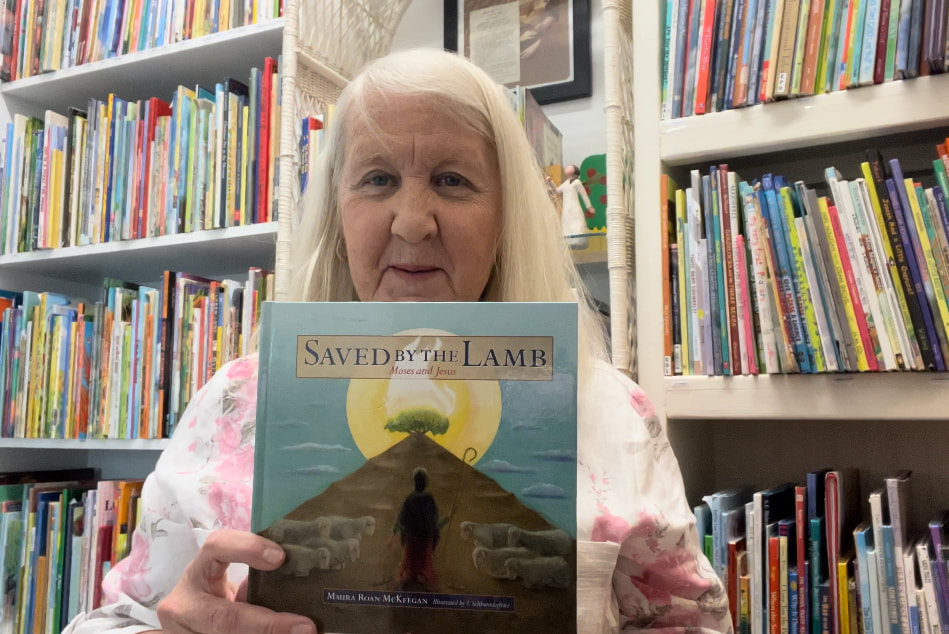
MEMORIES FROM OUR STORYTIMES IN THE GARDEN FROM
2009-2020


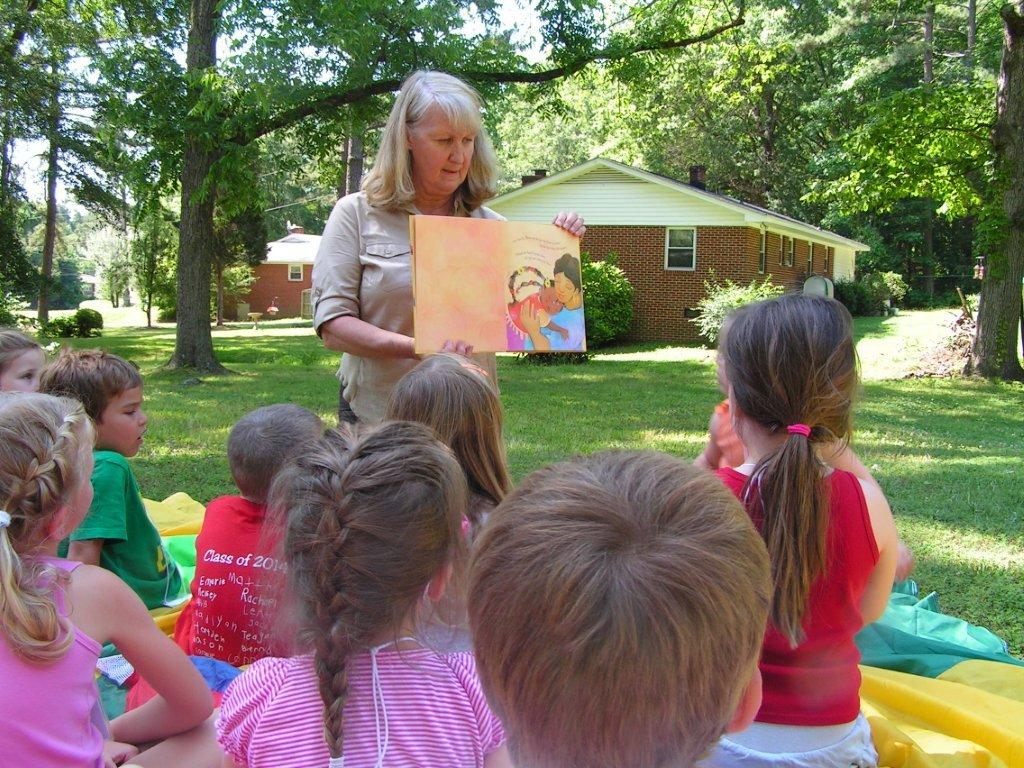


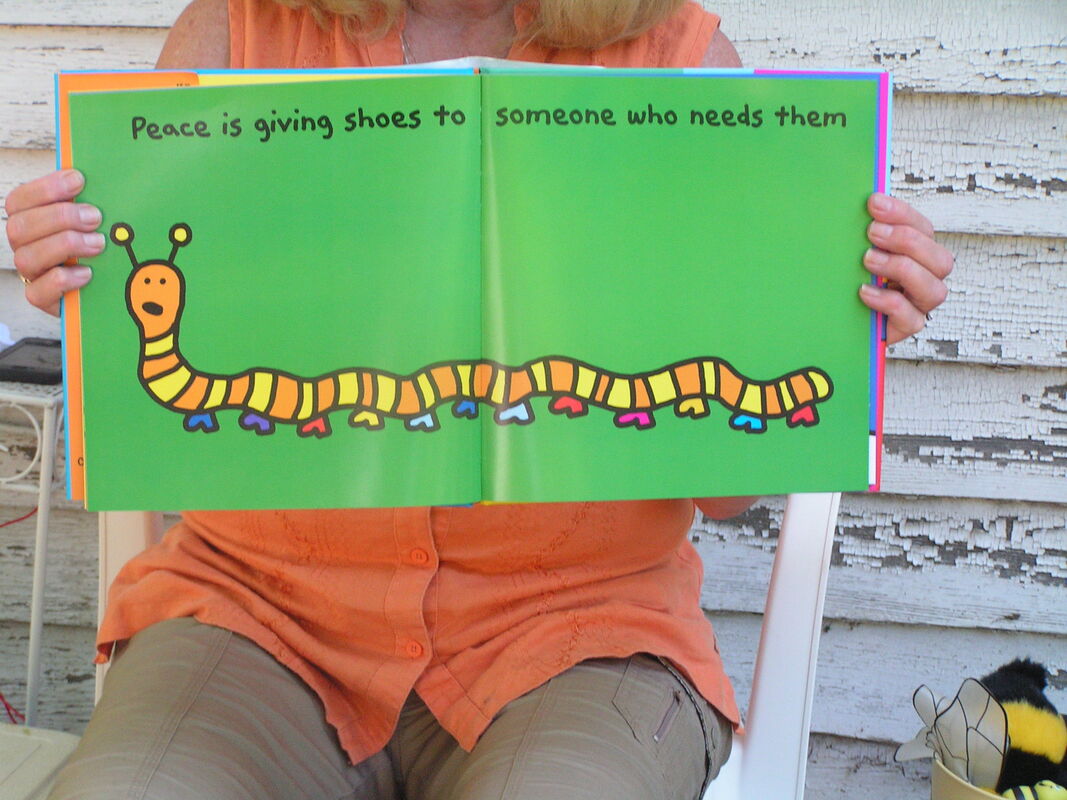




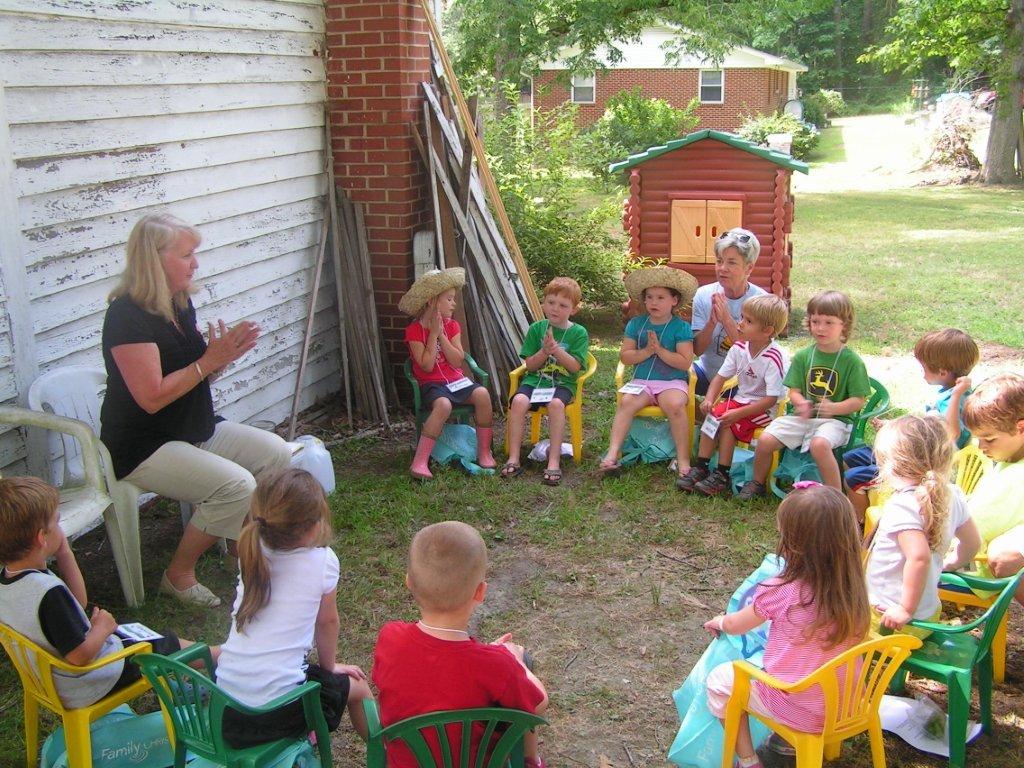





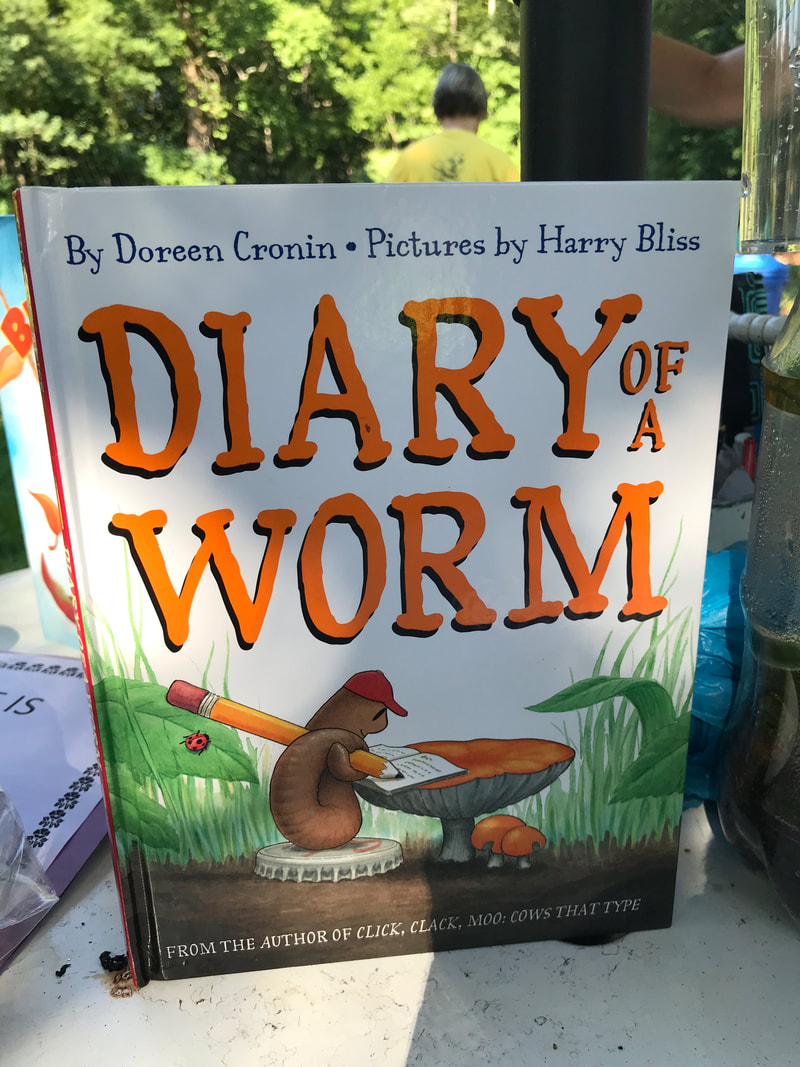





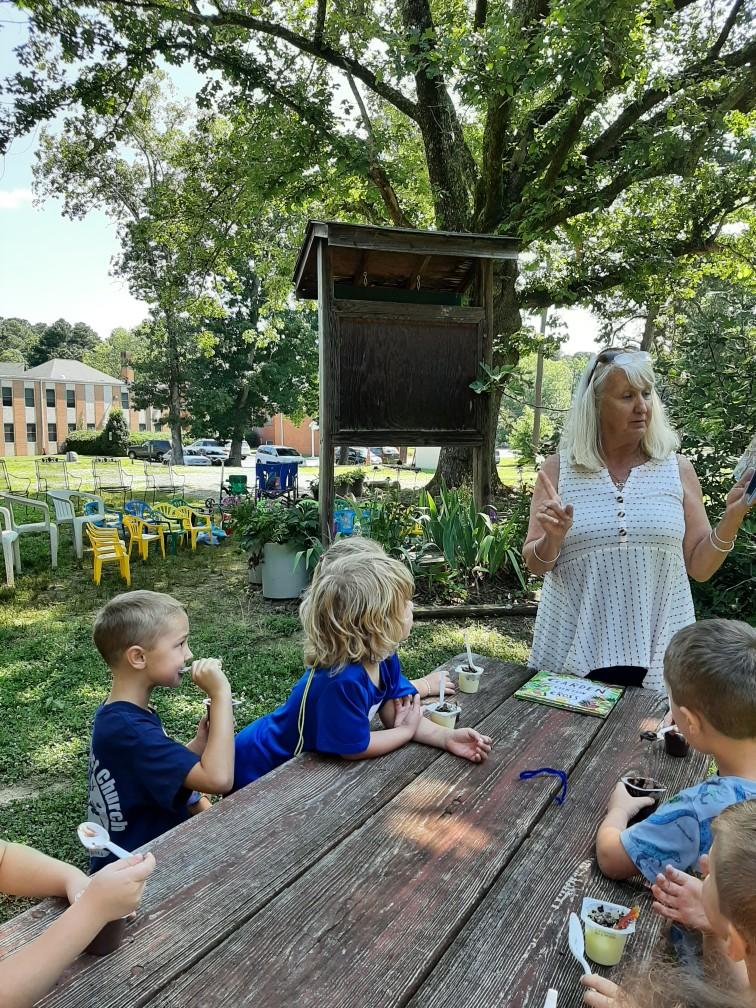
I BELIEVE IN CHILDREN
....There is faith in their eyes,
Love in their touch
And hope in their attitude.
....I thrill with them at life's joy's
Run with them through tall grasses
And bow with them in worship.
....They are the fragile dream of yesterday,
Life's radiant reality of today
And the vibrant vision of tomorrow.
(taken from www.handprint.org.)
....There is faith in their eyes,
Love in their touch
And hope in their attitude.
....I thrill with them at life's joy's
Run with them through tall grasses
And bow with them in worship.
....They are the fragile dream of yesterday,
Life's radiant reality of today
And the vibrant vision of tomorrow.
(taken from www.handprint.org.)